Ferrari Hypersail: Renewable power meets automotive innovation
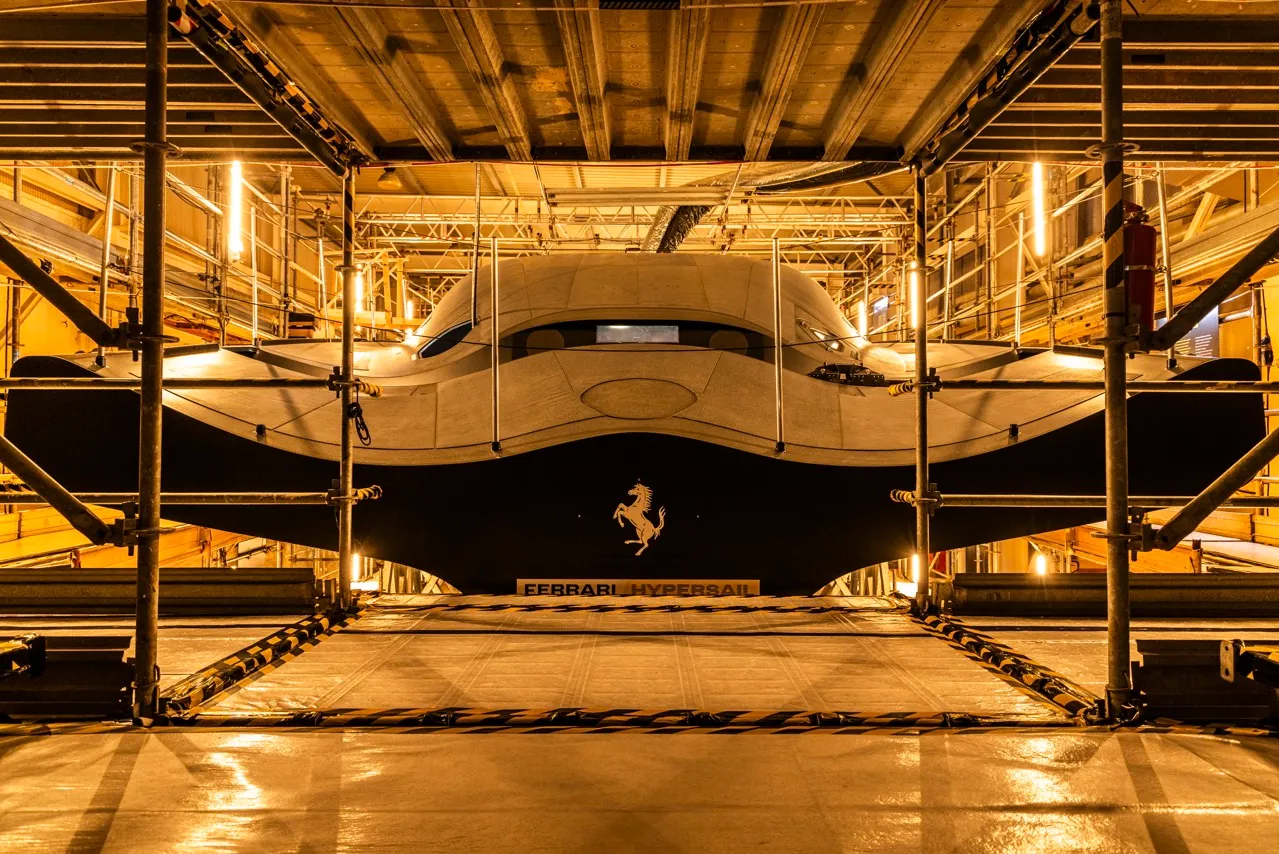
When Ferrari announced in 2025 that it had been working for three years on a secretive project, it would have been easy to gloss over it as a prelude to another supercar launch. But this was different – Ferrari, it turned out, had been working on a yacht project.
It was called Ferrari Hypersail, and the 30 metre, full-foiling monohull vessel had a singular goal – break ocean records, while applying evolved technology to ensure that it could operate using nothing but harvested renewable energy. Many raised an eyebrow – what, after all, do Ferrari know about boats – but the project has more symbiosis with its sports- and hypercar division than meets the eye.
“It’s a sporting challenge, but at the same time it’s also a technological one,” says John Elkann, Executive Chairman of Ferrari. “Hypersail gives us the opportunity to experiment in new areas. If you think about aerodynamics, which is very important in what we do in the racing world and in our sports cars, this project puts our skills to the test. There’s also the ability to innovate in areas we would never have imagined with the application of several patents that have been developed, including for our sports cars. We have a drive to never say something is impossible.”
Ferrari has been responsible for the whole project, from the concept phase to the testing phase and beyond, says Matteo Lanzavecchia, Ferrari Hypersail’s CTO. “We’re drawing on all of Ferrari’s expertise in fluid dynamics, control systems, energy management, high-voltage and hybrid capabilities, mechanical systems design, systems integration, and of course Flavio Manzoni’s team for the styling design element,” he confirms.
“In fact,” he adds, “we’ve found many synergies between the worlds of Hypersail and sports cars such as the F80 supercar. For example, there is expertise in control systems, energy management, and aerodynamics, all of which are important on this flying boat.”
Similarly, Hypersail Team Leader Marco Guglielmo Ribigini brings sports car experience directly to the team, joining the project after two decades designing some of Ferrari’s most iconic supercars right up to the concept work of the F80. That has proven key, because Hypersail has a lot more in common with Ferrari’s cars than most people realise.
Record running
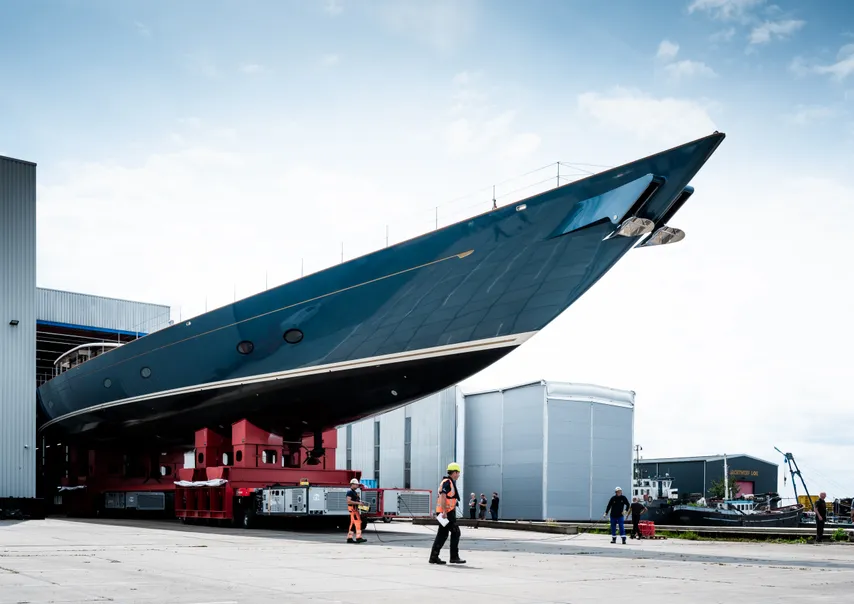
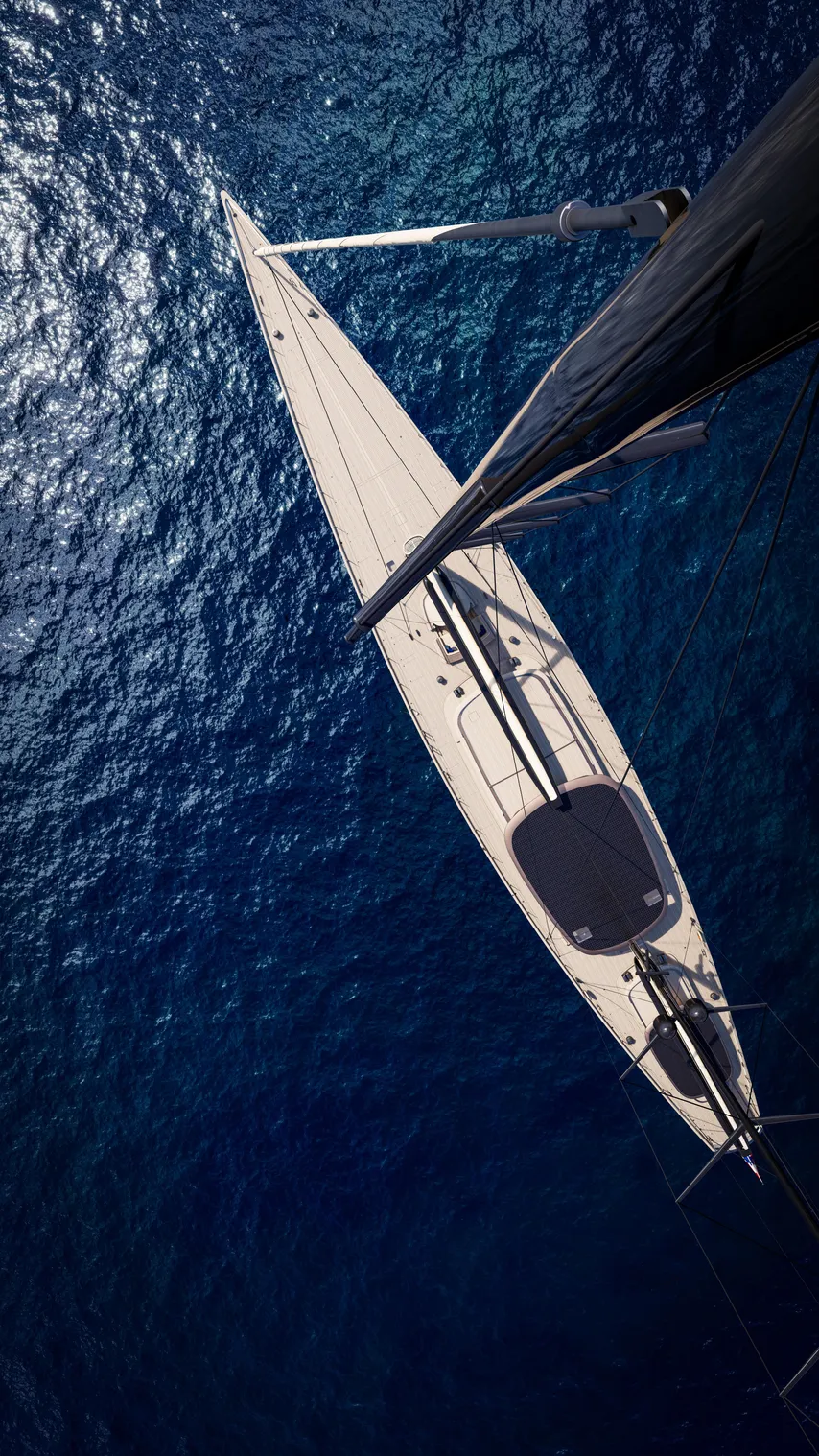
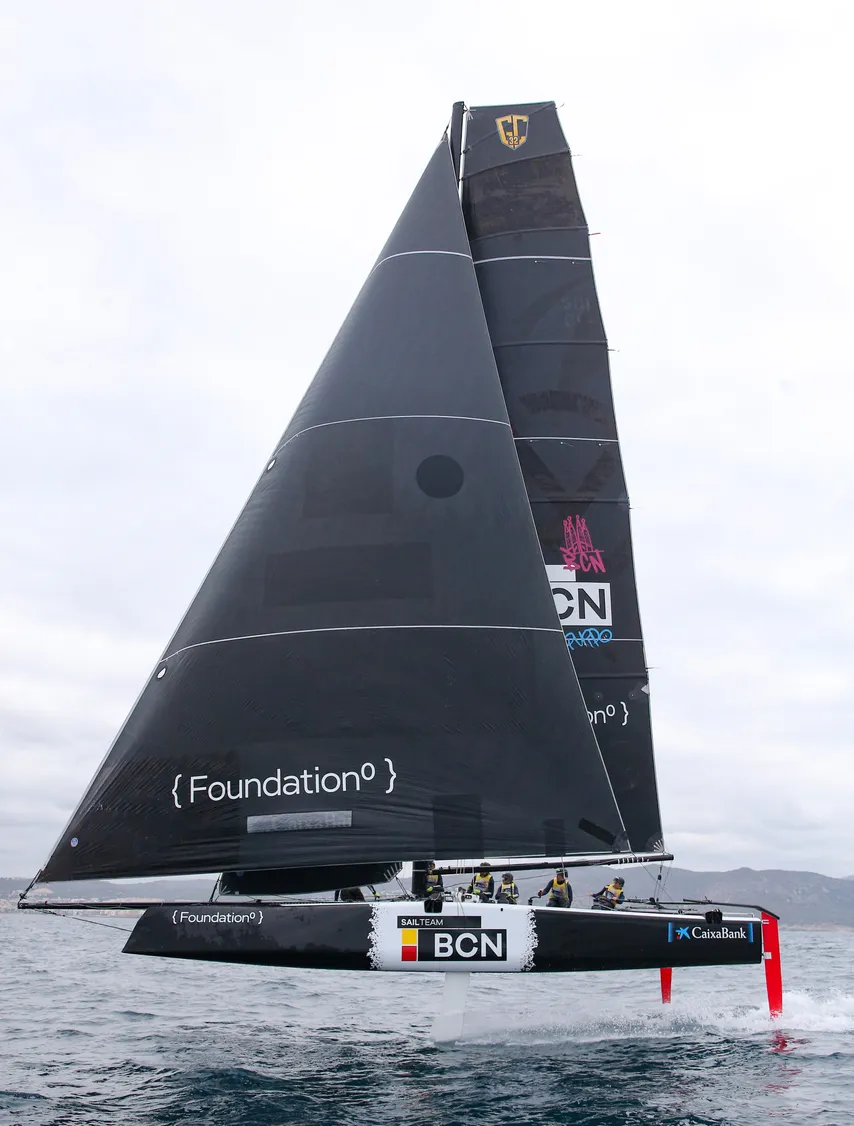
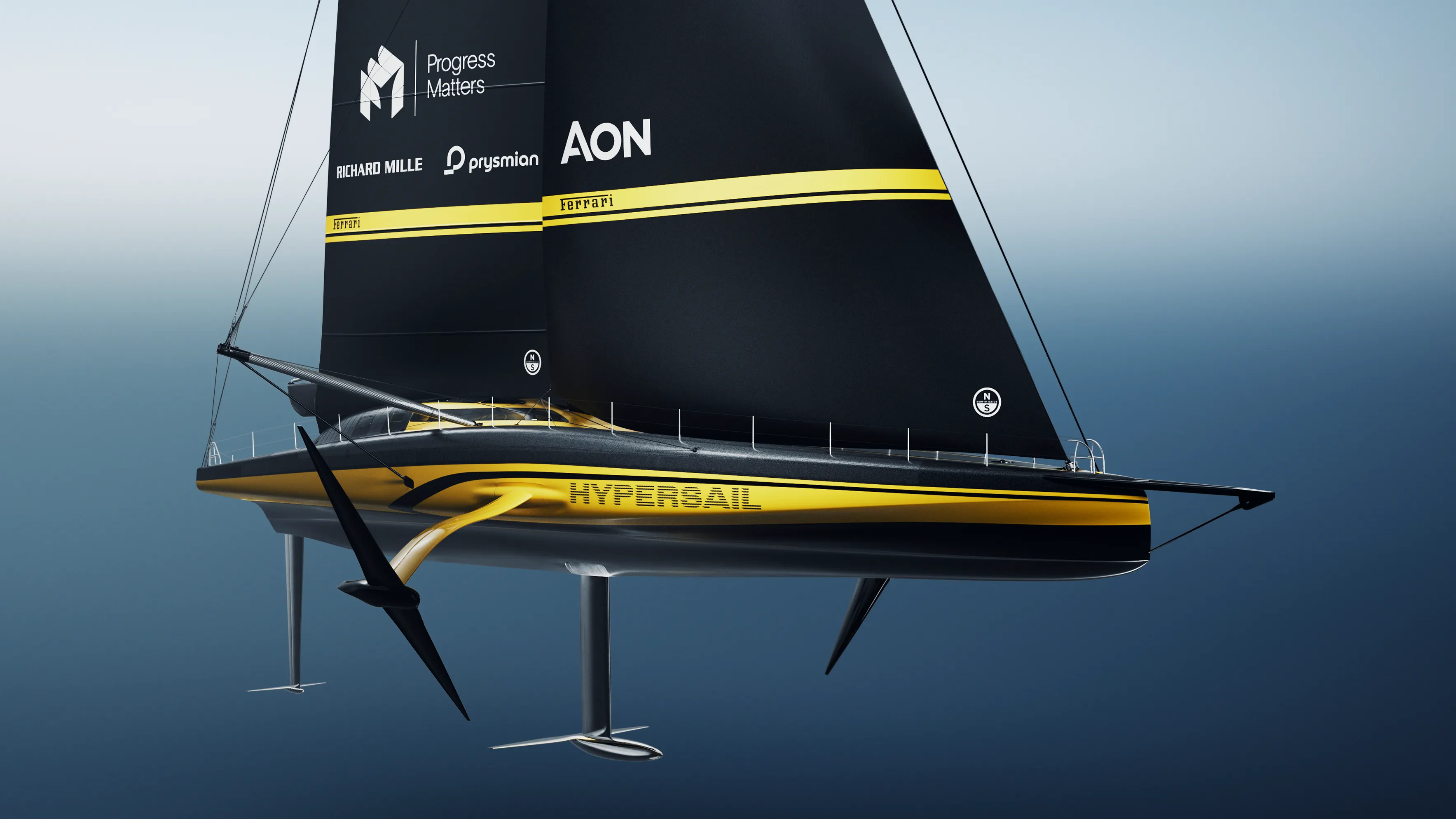
The yacht has been designed to break ocean records, and to achieve this the project team at Ferrari, along with naval architect Guillaume Verdier, have developed a 30 metre monohull that will fly on foils which, crucially, include foiling arms on either side plus foils on both the keel and the rudder. This means the yacht will essentially fly, the hull rising clear of the water on the foils which will reduce drag and therefore enable it to sail faster and more efficiently.
The multiple foil approach gives Hypersail three points of contact on any given point of sail, imparting stability. Here, the automotive crossovers start to creep in. “We thought, why don’t we develop software like we have for our cars which controls the movement of the body of the car?” offers Ribigini. “This would control the flight of the boat and allow the sailors to be more focused on the sailing.”
The flight controller is the brain of the boat. In order to maximise performance, the foils will feature fast-acting flaps controlled by a central brain that will keep the yacht flying at the optimal height. This is great for performance, but the constant actuation of the foil flaps, which will make micro-corrections to maintain optimal flight, means a constant demand for power.
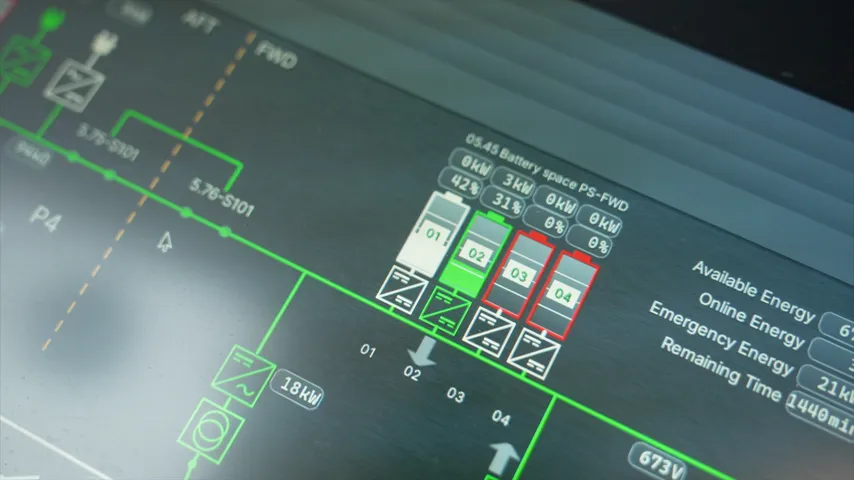
“The system is quite complex,” Ribigini asserts, “because not only does it have to manage the flight of the boat but also it has to consider the energy it has available and how much energy it can give to the appendages through a continuous sharing of power between what is being harvested, what is being used, and what is stored in the two high-voltage batteries.”
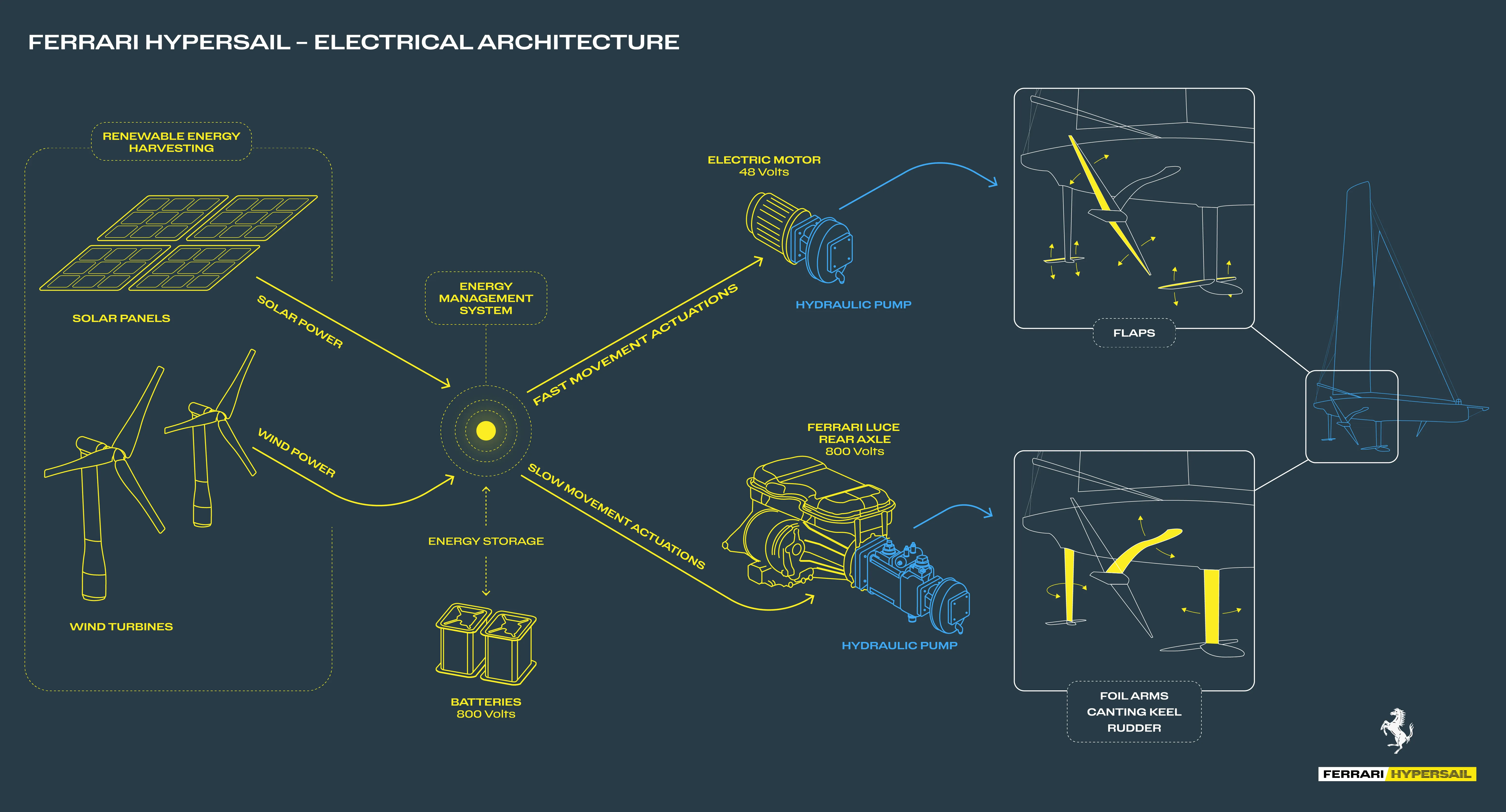
Herein lies a more fundamental aim of the project. It has been conceived around the drive to operate without using fossil fuels, meaning a central focus has not only been how to harvest renewable energy while sailing in potentially challenging ocean conditions, but also how to maximise the efficiency of the systems on board.
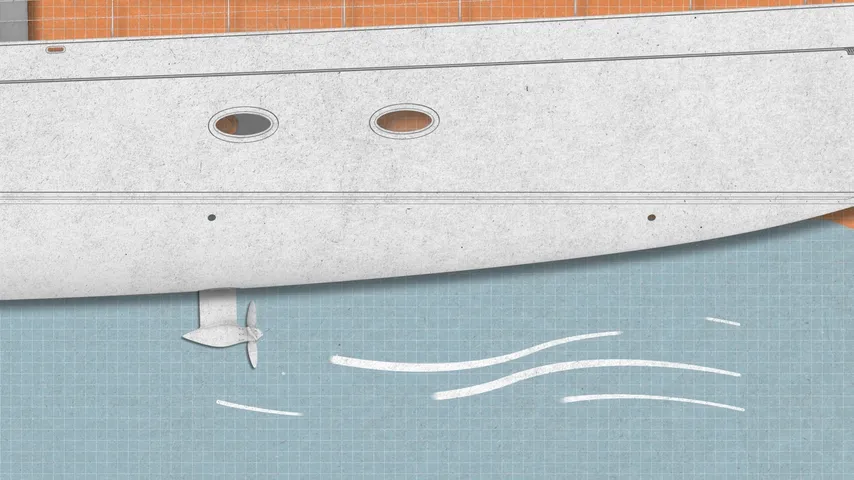
It has led to a sharing of technology and know-how between Ferrari’s sports car and hypercar division and the Hypersail project. “We are bringing innovation in terms of processes but also in terms of knowledge and components direct from Ferrari,” Ribigini explains. “That was one of the main proposals of this challenge. So, one of the components we are really proud of is the rear axle of the new, electric Ferrari Luce. We have taken that axle, rotated it 90 degrees and installed it on the boat to drive, on one end, the retractable propeller that’s used for entry and exit to harbour, and on the other end the hydraulic pump that moves the rams for the canting keel and the foil arms.
“But we have also taken things like the DC-to-DC converter of the Ferrari F80 hypercar, which manages 12 V, 48 V and 800 V,” he continues, “and we are using the ultra-efficient electric motors from the fast active suspension system of the Ferrari Purosangue and F80 in our new winch-by-wire system.”
Ferrari’s winch-by-wire takes the concept of pedestal grinders – driven by the sailors to turn the winches that control the sheets of the sails, for example – and applies the principles of fly-by-wire by taking out the mechanical linkages between pedestal and winch, and replacing them with electric motors. This means the grinder instead turns an electric motor to create electricity, which can then be directed to whichever winch or service needs it, where another motor converts it back into mechanical energy.
It means the grinder can operate at a constant rate rather than slowing down as mechanical loading increases, which is more efficient and which means they can input the same power into the system in much less time. By using the hyper-efficient motors developed for the Purosangue’s active suspension system, the winch-by-wire solution offers considerable gains over the conventional, mechanically linked approach.
A key technical challenge has been to ensure that the power demand of the yacht’s systems matches what the vessel can actually produce through renewables harvesting. The main sources of energy are solar panels spread across the decks and hull of the boat, and specially developed wind turbine generators that can be mounted on the transom.
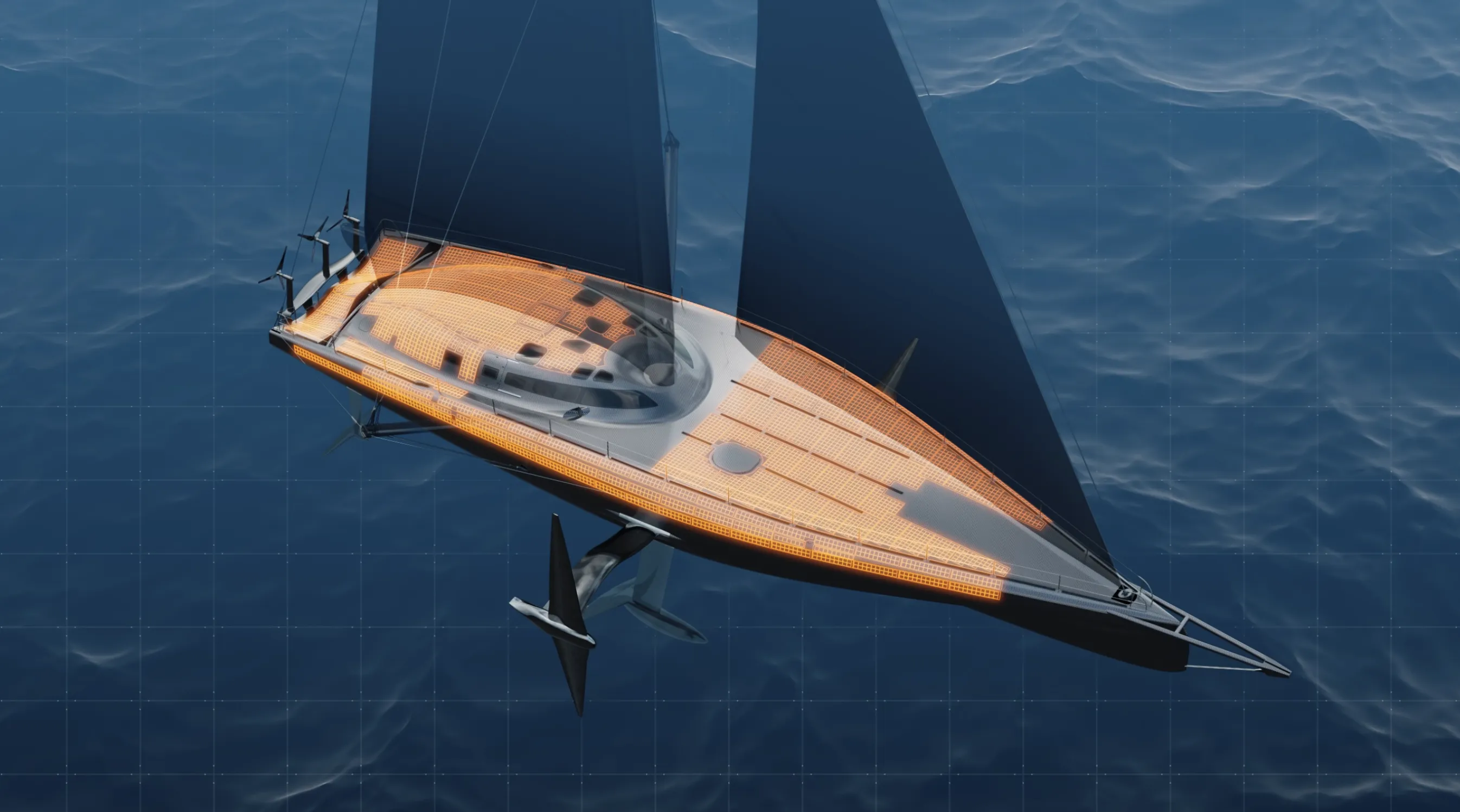
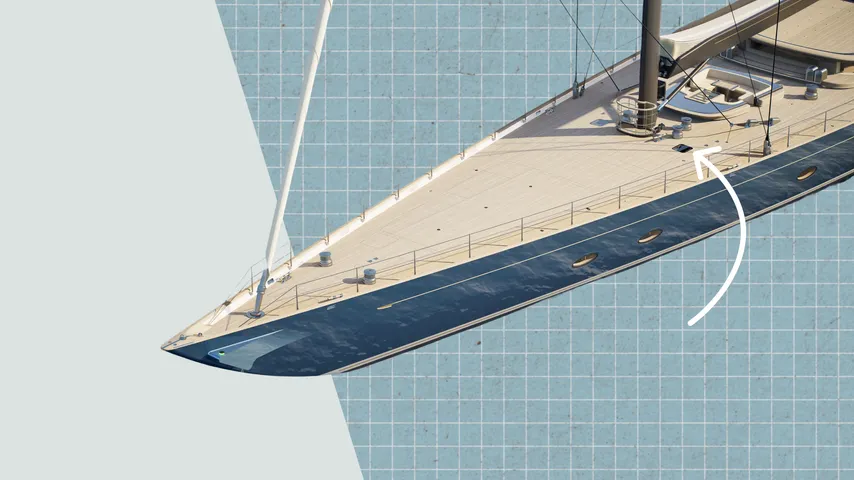
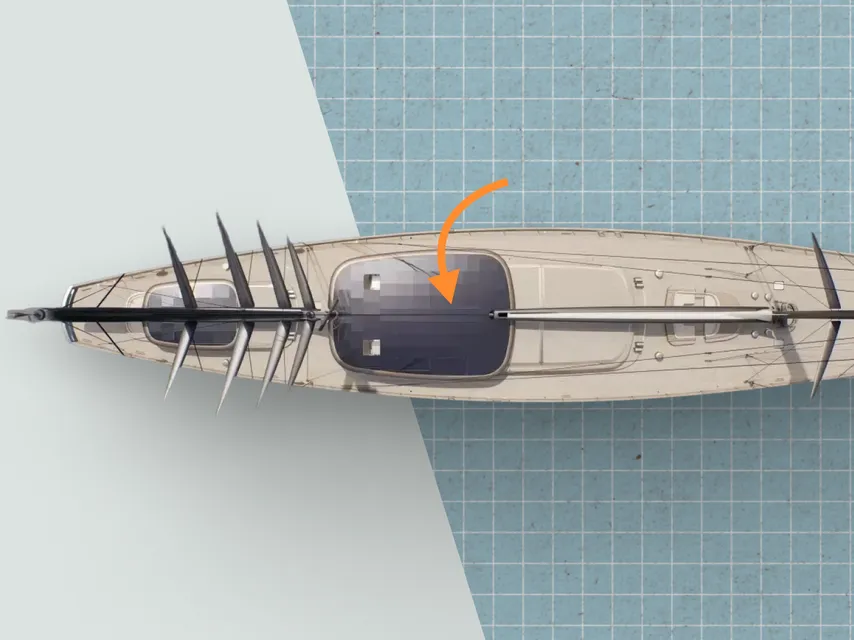
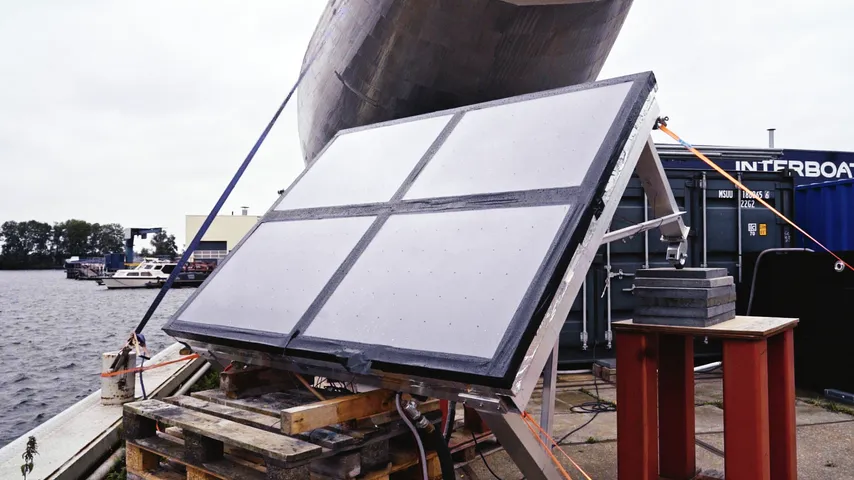
The solar panels will cover an area of 100 square metres, including some which are angled thanks to the curves of the aerodynamic coachroof or near-vertical when running along the topsides. This does mean that in higher latitudes there will be some panels that are better aligned to a sun that may be lower to the horizon, but the team still faced the issue of shading – the same problem that faced the SY Zero project team.
To maximise solar harvesting, the Ferrari team developed an alternative string-level MPPT architecture that allows for power harvesting when panels are partially shaded, and overall the team expects the array to deliver up to 20 kW.
For the wind turbines, the team faced a novel problem – with Hypersail expected to sail consistently at up to 50 knots, the apparent wind on deck would be too high a speed for current wind turbines to handle due to the tip speeds of the blades going supersonic. To counter this, Ferrari has developed a speed controller that can keep the blade tips subsonic, which will enable the vessel to harvest wind even in the extreme apparent wind conditions of 70 knots or more over the deck that it will experience when sailing at full speed. The team has also been developing other energy harvesting solutions, including a kinetic harvesting system that would gather energy from the pitching of the bow while also serving to dampen that pitching moment.
There’s an added level to the Hypersail project, because alongside all the technical development of the energy harvesting and control systems architecture, the team has adapted the simulator technology it uses to virtually test its sports cars and hypercars to give the technical teams and sailing team alike hands-on experience of the yacht.
It centres on a recreation of the helm station, with VR headsets allowing for an augmented reality simulation of the controls and interfaces along with sailing performance based on detailed design parameters and the simulated, real-time feedback of the hundreds of sensors that will be fitted throughout the vessel. It means the crew can get up to speed on boat handling and fine-tuning, as well as understanding the performance parameters, while the development team can harvest virtual sensor data and tweak control ergonomics.
In addition, the full technical model of the yacht can be explored in Ferrari’s VR suite, giving a fascinating insight into technical installation schematics and other systems design and information. And while Hypersail’s systems draw heavily on development work Ferrari has done for its supercars and hybrid systems, where minimising battery weight and optimising electrical power use is critical to maximising performance, Ribigini says that Hypersail is already feeding insights back into the car side of the business.
It’s all leading to the crux of the project – launch, which is due to take place by the end of 2026. At this point, much like SY Zero, the project switches to in-water commissioning, and an extensive sea-trials phase into 2027 where every aspect of the yacht, its energy harvesting and management systems, efficiency, flight control and sailing performance can be empirically tested against design expectations.
“There will be a lot of months after commissioning where we start to sail and test the systems to make sure they work properly, because we have to guarantee the functionality,” Ribigini concludes. “That will probably be the most complicated phase!”