Why the future of fresh water is in the deep sea
By 2030, global water demand is expected to exceed supply by 40 %. This is something we need to solve sooner rather than later.
While increasing the efficiency of how we use water is a vital piece of this puzzle, desalination will also play a vital role in this journey. The challenge, however, is that conventional land-based reverse osmosis plants are energy-intensive, require vast amounts of land, and harm coastal ecosystems by dumping chemical-laden brine back into the ocean after the process.
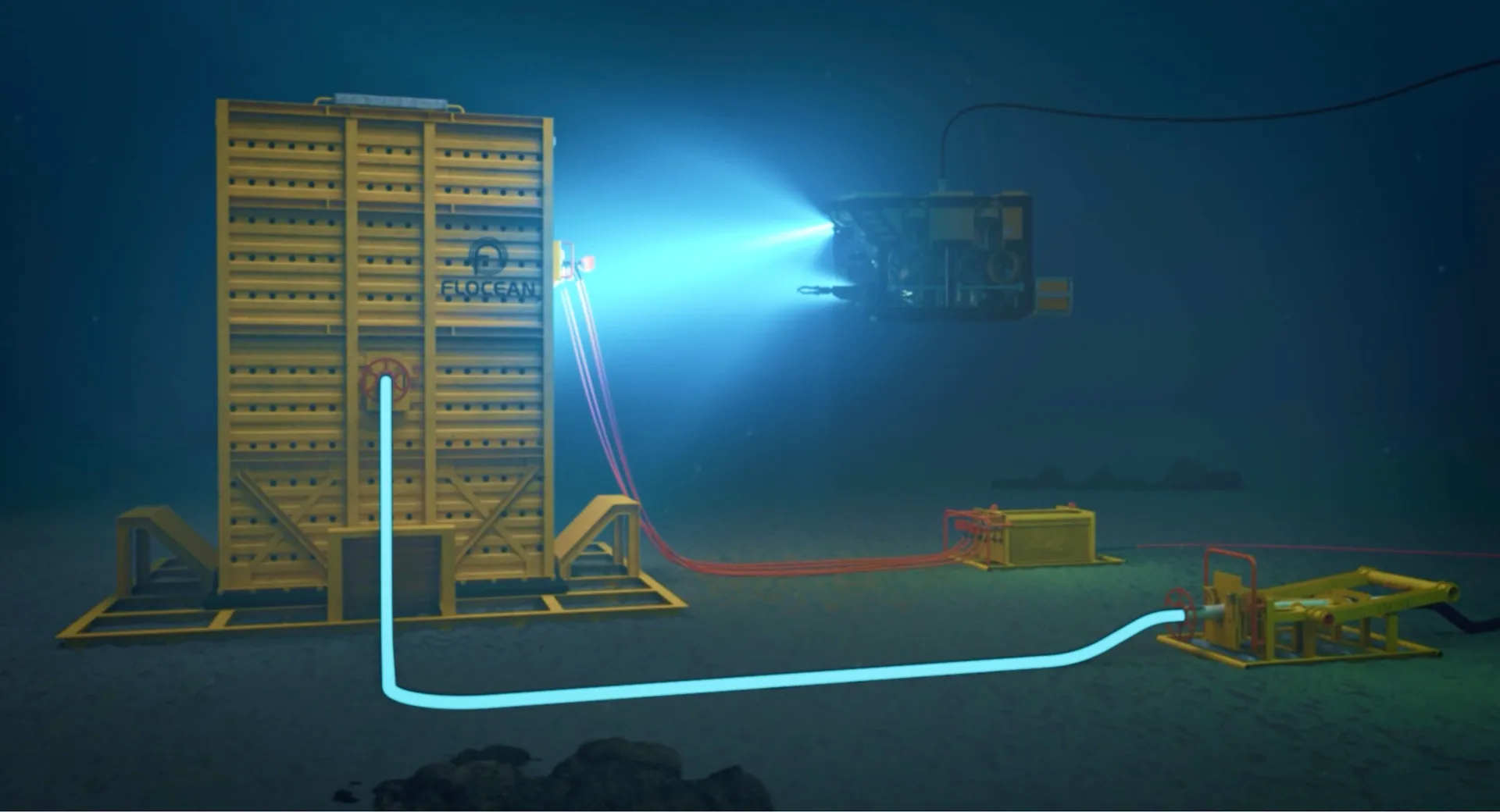
Flocean wants to solve this by taking desalination underwater. Specifically, 500 metres underwater.
We spoke with Birgitte Lind-Hjertum, the company’s CFO, to find out more about the project.
It works like this: modular desalination pods are placed on the ocean floor, using the characteristics of the deep sea to produce water cleanly and cost-effectively. At this depth, hydrostatic pressure reduces the energy required for reverse osmosis by 30 % to 50 %.
Because the deep-water ocean is predominantly clean, no harsh pre-treatment chemicals are needed in the process. As an added benefit, the subsea location makes the pods resilient to severe surface weather and algae blooms.
And the environmental positives? They’re massive. A single medium-sized plant can reduce CO₂ emissions by 21 million kilograms annually. Over a typical 20-year contract, that equates to 420 million kilograms of reduced emissions from just one project.
Flocean’s technology itself uses already proven, off-the-shelf components adapted from the offshore energy sector, and is aimed at island nations and small coastal cities; effectively any community needing between 5,000 and 50,000 cubic metres of water a day.
To prove its effectiveness, developers are building full-scale demonstrators in Norway and are in the process of co-funding for feasibility studies in regions like the Maldives.
The global market for such a solution is vast, with water supply dwindling and the race for energy independence in full swing. Ultimately, subsea desalination represents a shift in critical infrastructure, proving that the most environmentally sustainable solution can now also be the most economical.