Inside Greenpeace's radical new wind-powered ship
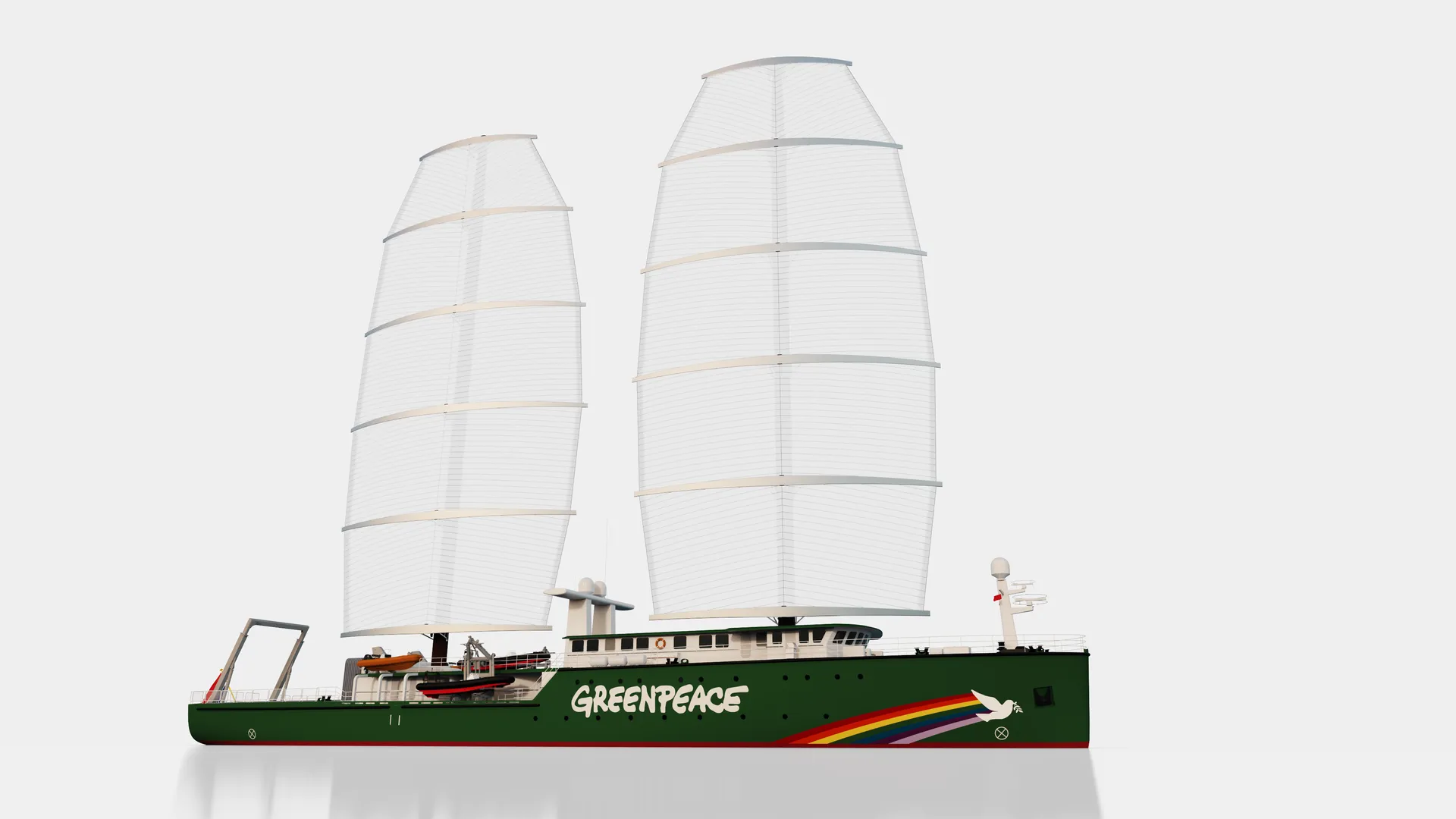
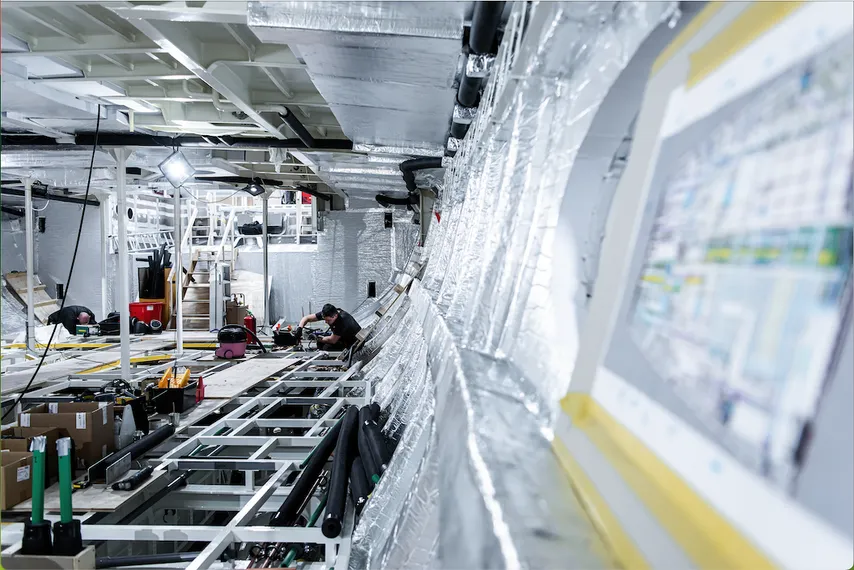
Tucked away in the industrial shipyards of Vigo on Spain's northwest coast, engineers are assembling a boat that aims to show the shipping industry what wind power can really do.
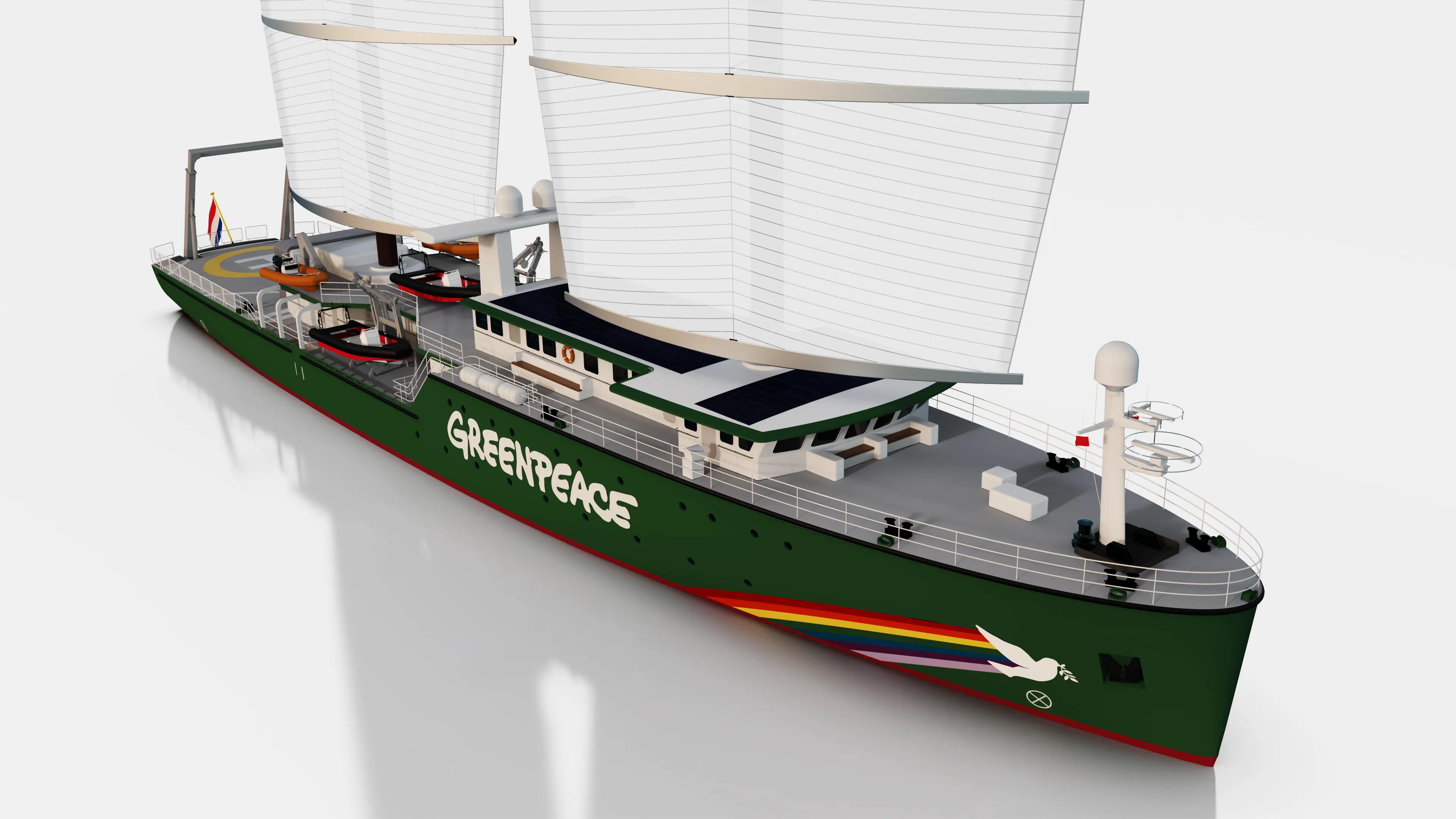
Set to become Greenpeace's new flagship when it enters service next year, the 75-metre sailing vessel marks a deliberate shift from "wind-assisted" to "wind-led" design. Instead of building a traditional motorship and adding sails to reduce fuel consumption, the ship is built from the hull up to harvest wind as its main engine.
"Greenpeace's new ship is described as 'wind-led' because wind is its primary source of propulsion, not a supplementary add-on," Fabien Rondal, the organisation's Deputy International Programme Director, tells Foundation⁰. "The vessel is a sailing ship at its core."
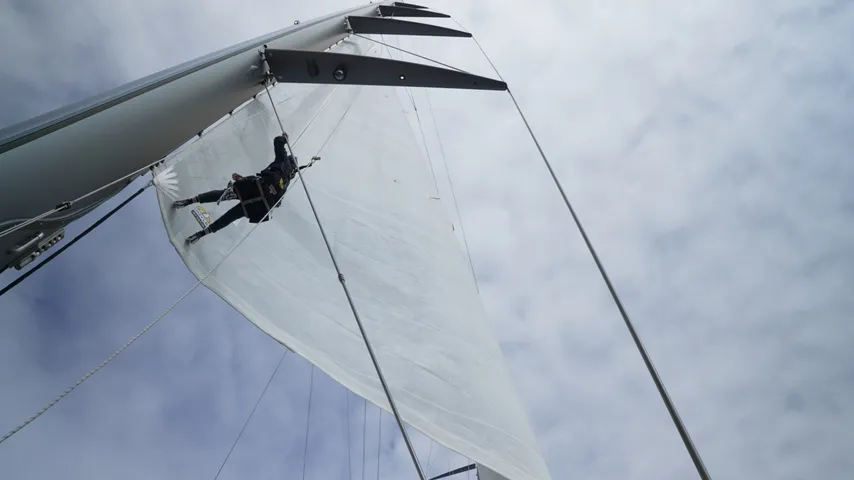
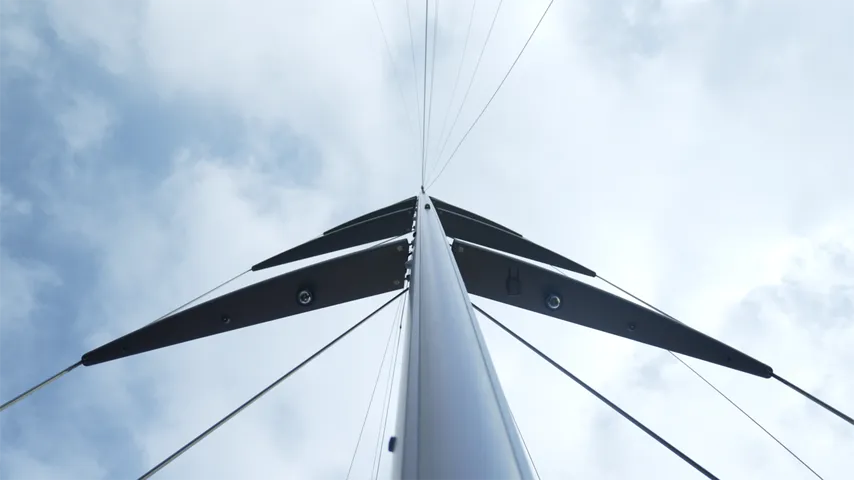
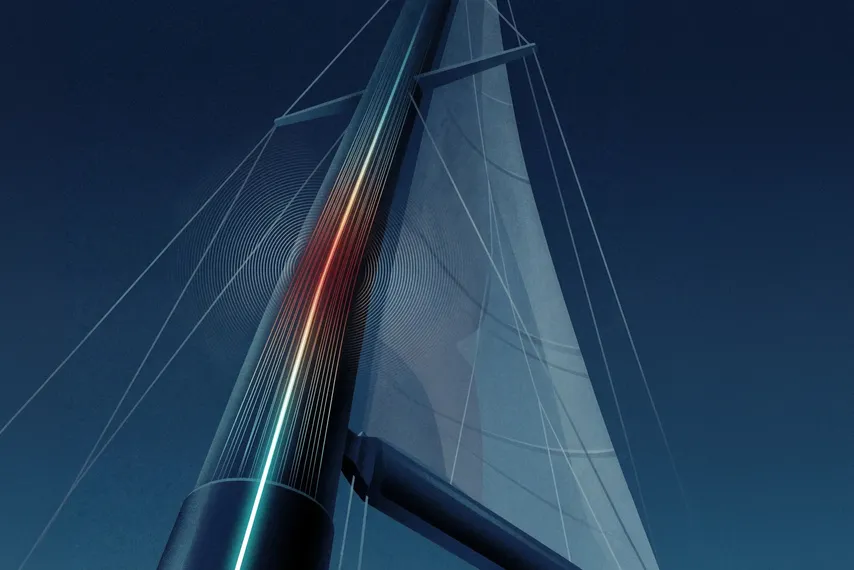
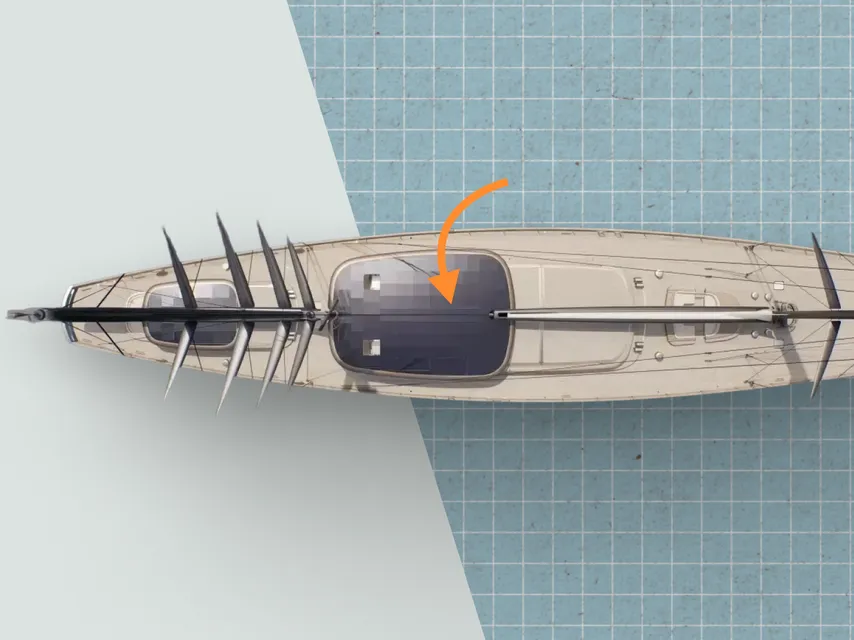
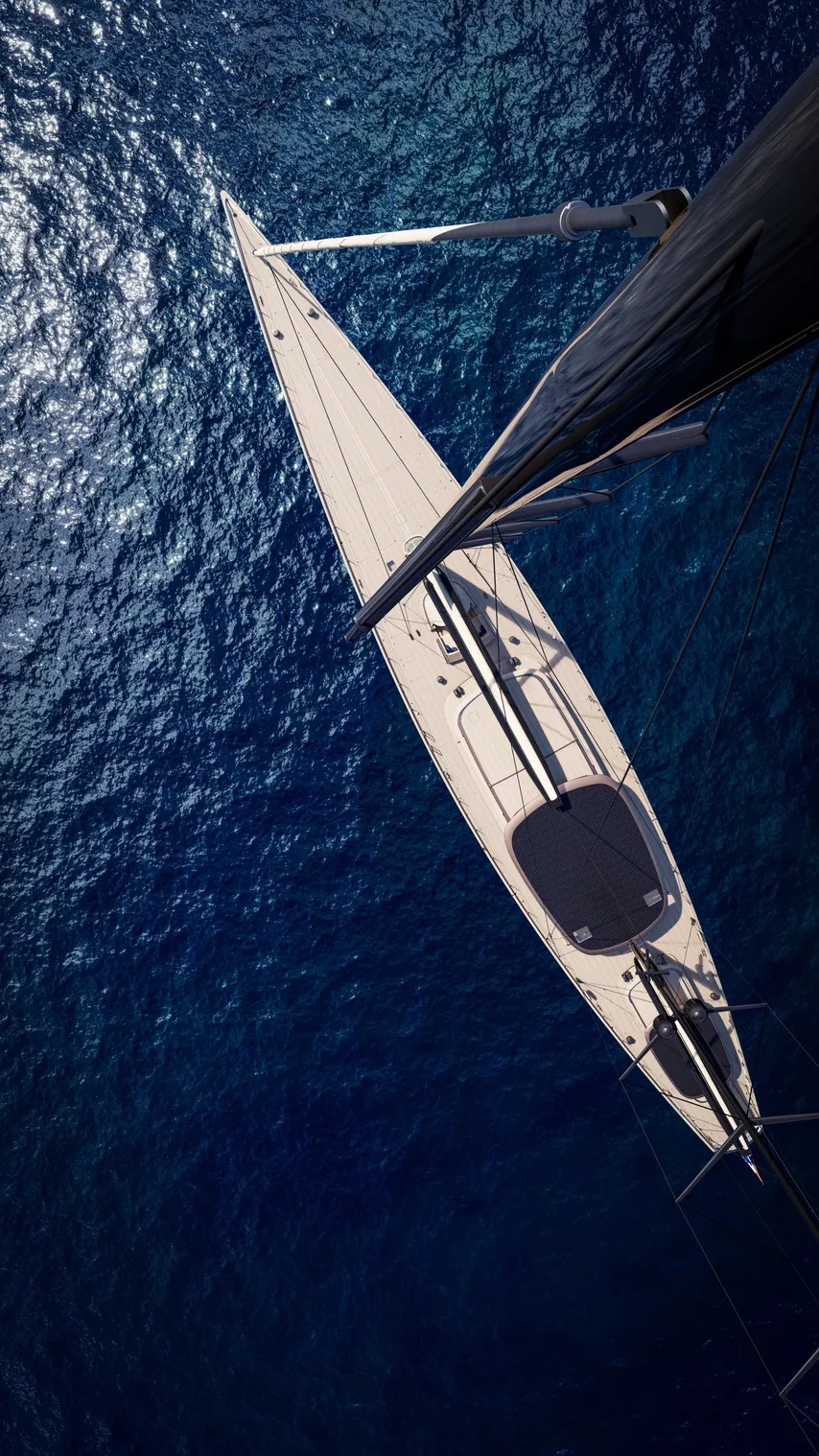
At the centre of the design is the DynaRig system, which uses rotating masts and sails to capture the wind and provide the ship's main driving force. The concept dates back to 1967, when German engineer Wilhelm Prölß began researching how to make sail power efficient enough for commercial shipping. His solution was a rig of freestanding, rotating masts, controlled mechanically rather than through traditional rigging.
The idea gained real momentum in 1973, when an oil embargo sent fuel prices soaring and created a strong economic reason to look at wind again. Prölß's research soon became the basis for a proposed bulk carrier designed to run on wind power at scale — but the project was never built. Once the embargo passed and fuel turned cheap again, engine-powered ships stayed more attractive, with their environmental costs absent from the accounting books.
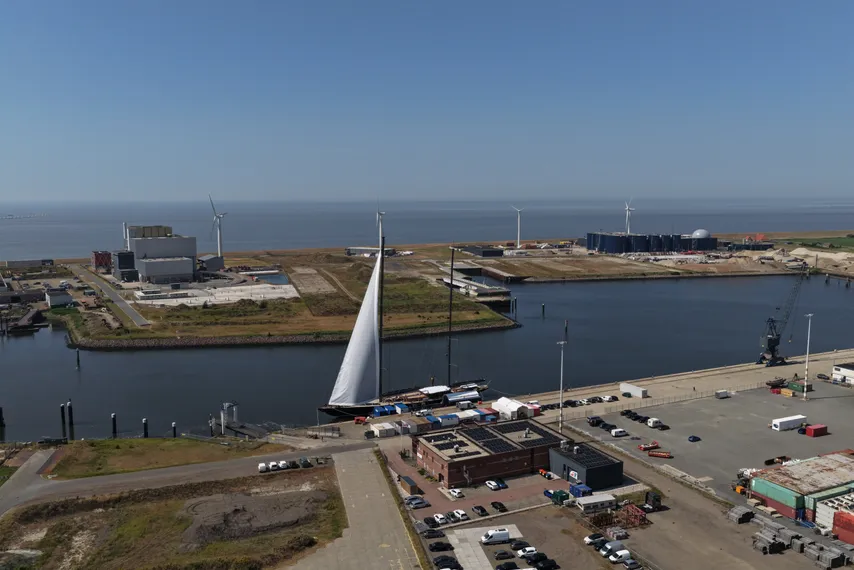
Decades later, however, Dutch naval architects Dykstra (who also worked on sailing yacht Zero) revived the concept for the 88-metre Maltese Falcon, the first yacht to use a full-scale DynaRig. Now, Greenpeace is putting it to work on a very different kind of ship.
Sailing the seas
In Vigo, Greenpeace will install DynaRig on a campaigning vessel that can cross all the world's oceans, including polar regions.
"Under the right conditions, the ship will be able to circumnavigate the globe using wind power alone," says Rondal.
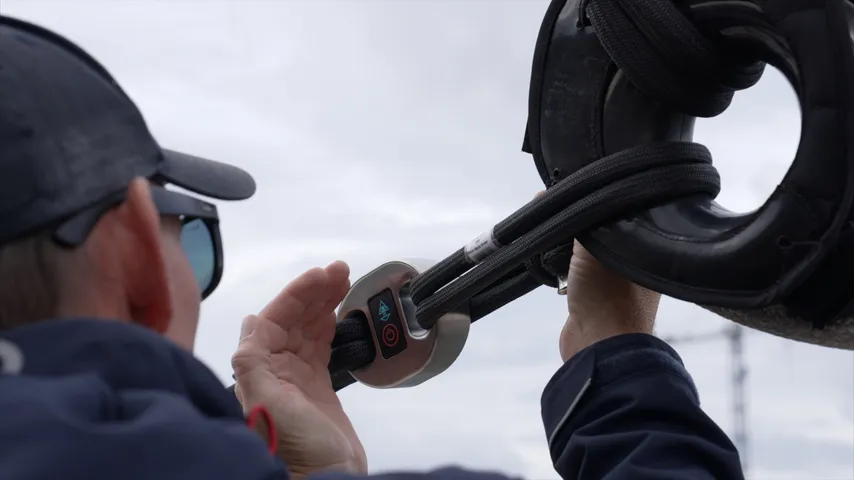
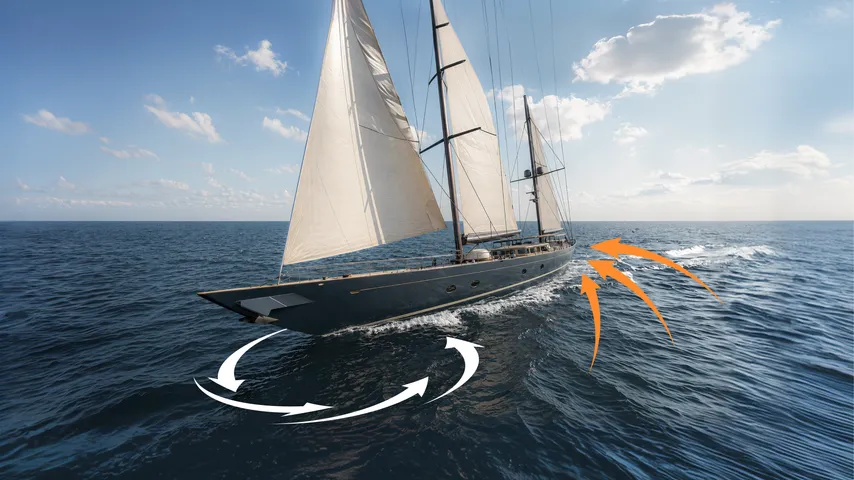
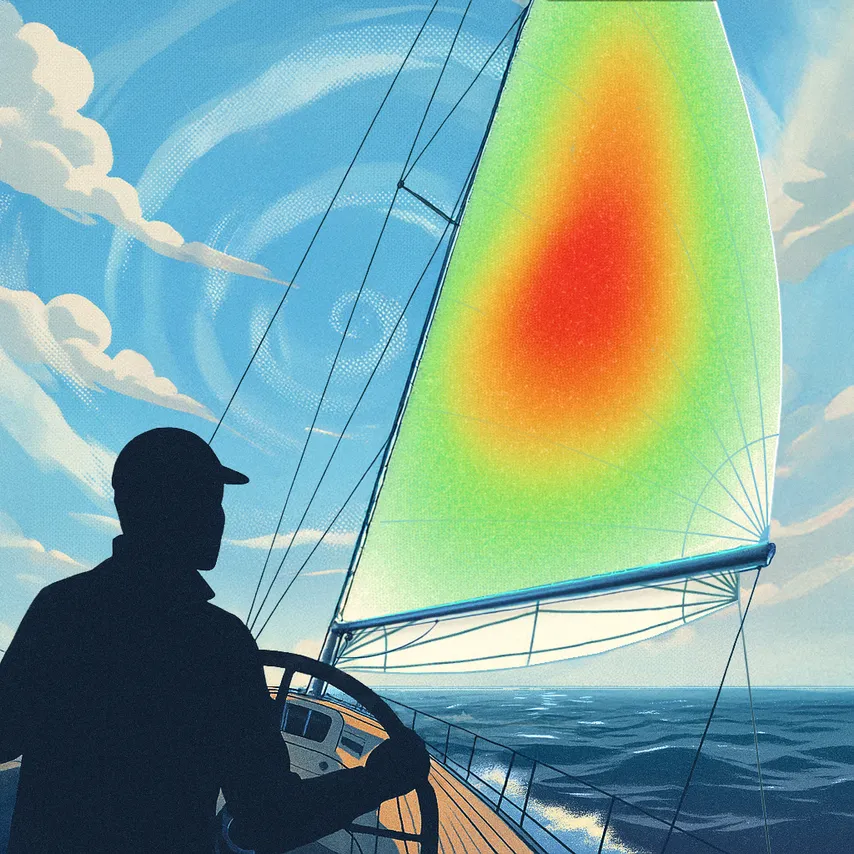
All of that puts different demands on the technology. To meet them, the ship’s DynaRig will carry roughly 1,750 square metres of sail, deployable in about eight minutes. "Sails are deployed, trimmed, and stowed at the push of a button," says Rudy Jurg, the company’s head of sales. Onboard sensors then automatically adjust the sails to the ship's course and the prevailing wind. Because the whole mast rotates rather than just the sails, it can capture wind from almost any direction, generating lift the way a wing does rather than simply catching a following breeze. But the sails are only the starting point.
The wind needs backup
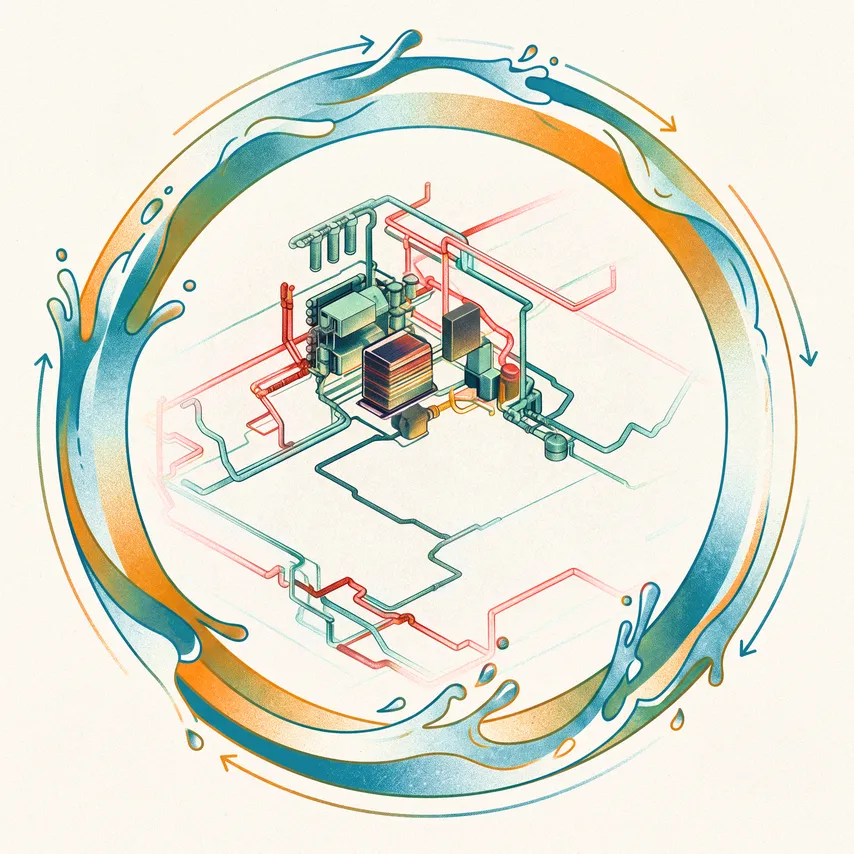
The ship is designed to generate electricity from several sources, depending on conditions at sea.
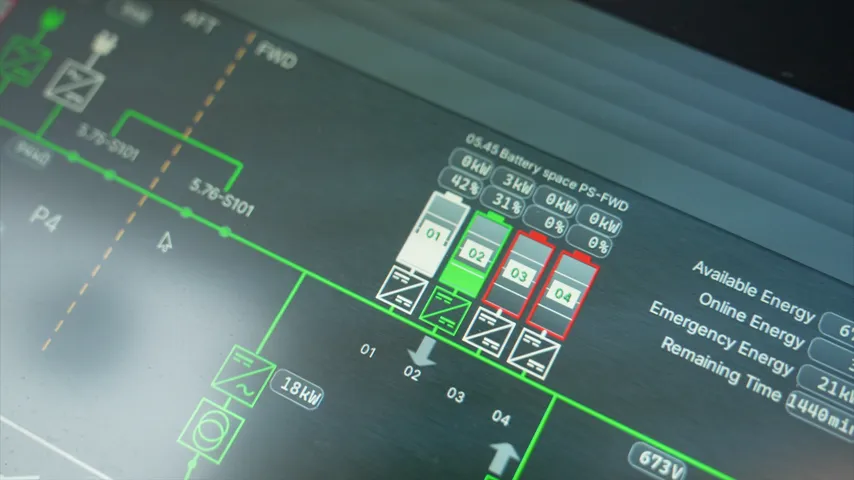
Two electric motor-generators drive its controllable-pitch propellers, with power supplied by four hydrogen fuel cells and four dual-fuel internal-combustion generators, backed by a battery system. The generators run on a dual fuel of methanol and marine gas oil (MGO), with MGO also serving as the pilot fuel needed to ignite the engines.
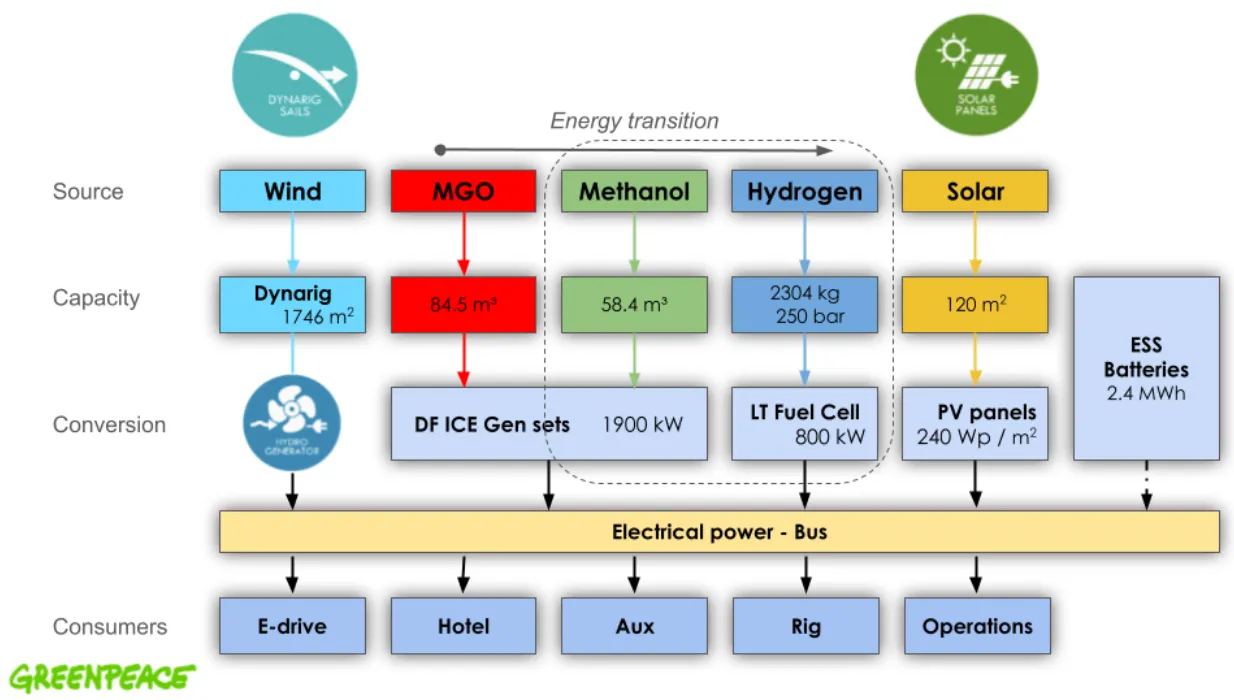
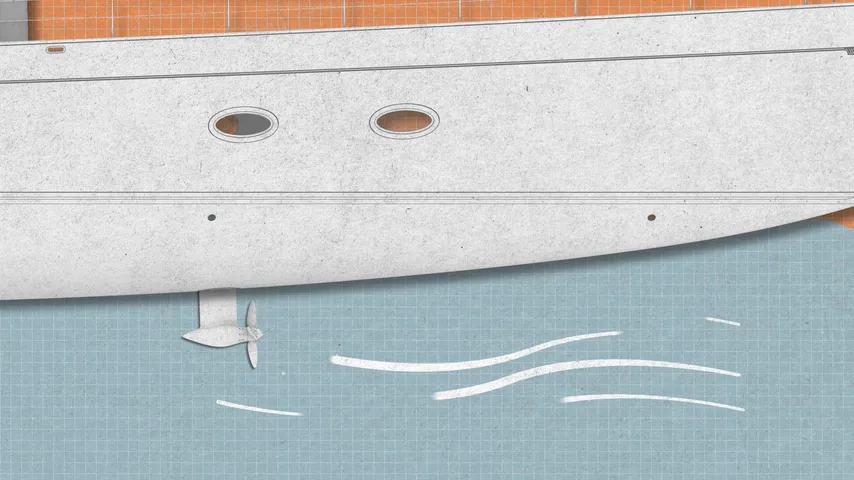
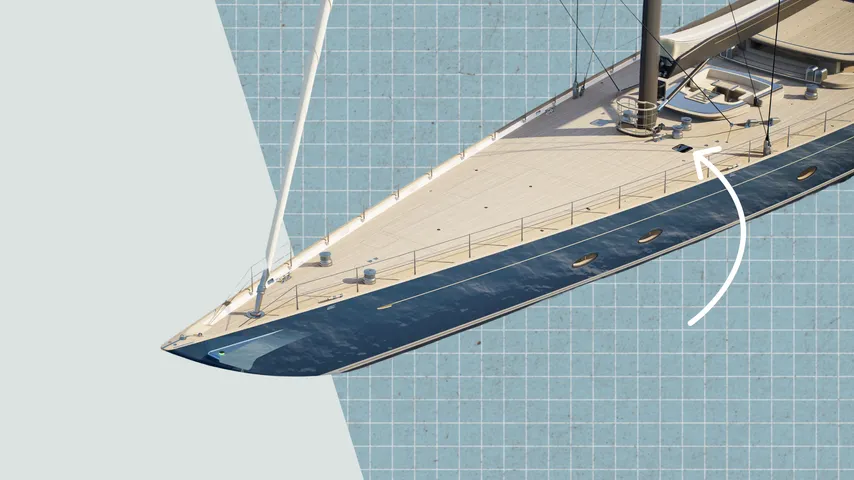
The system can also put energy back into the batteries. Solar generation feeds electricity into the network, while the propellers can provide hydrogeneration when the ship is moving under sail, turning some of its forward motion back into electrical energy. A power-management system coordinates the generators, fuel cells, and energy storage system, while the propulsion controls also integrate the bow and stern thrusters.
All of this has to work reliably in demanding conditions. The vessel is designed to operate from the Arctic to the tropics and remain at sea for up to 45 days, while its machinery is rated for seawater temperatures ranging from -2 °C to 35 °C and an engine-room temperature of up to 45 °C. That resilience is built for an intrepid, audacious — and sometimes perilous — type of work.
Maritime campaigns
Greenpeace has a long history of creative confrontations at sea. Before the organisation even had a formal name, its founders sailed a rented fishing boat from Vancouver to Alaska to protest underground nuclear testing. They named the vessel "Greenpeace" to match their cause. Authorities intercepted it in 1971 before it reached the blast site, but the publicity helped launch the organisation.
Fourteen years later, Greenpeace’s Rainbow Warrior was bombed by French agents in Auckland ahead of an anti-nuclear protest. More recently, the Arctic Sunrise has confronted oil drilling and industrial fishing operations, while the Esperanza spent years chasing whaling fleets and disrupting destructive fishing.
Greenpeace identified 14 capabilities the vessel needed, including undertaking polar expeditions, remaining at sea for 45 days, following ships for extended periods, operating in coastal waters and major rivers, and supporting scientific research. It will also have a multi-purpose helideck and the capacity to lift submersibles.
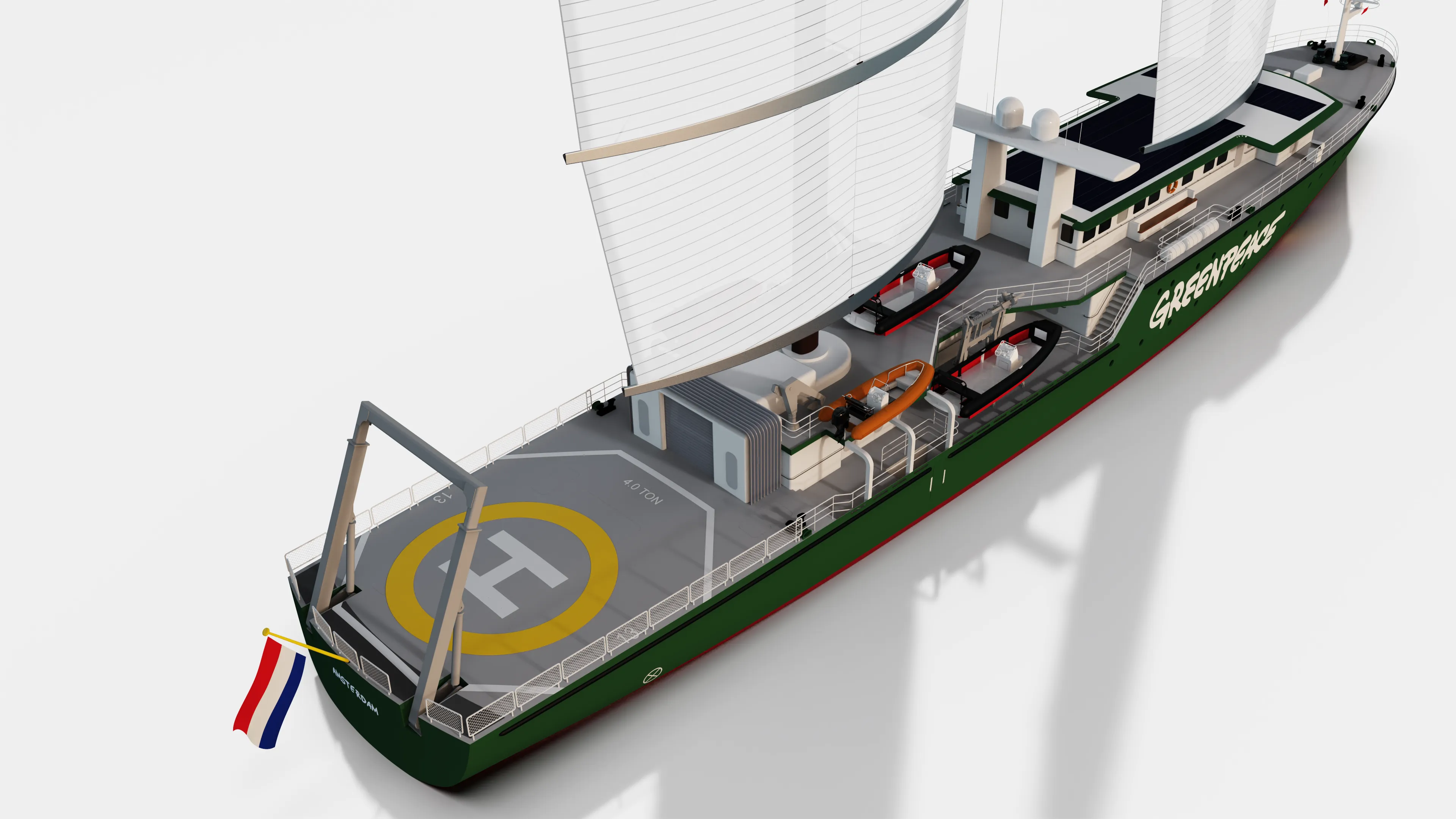
At 74.95 metres long and 13.35 metres wide, the new ship will be Greenpeace's largest. The Rainbow Warrior is 61 metres long and the Arctic Sunrise 49.5 metres. The new vessel will have a 5.5-metre design draft, an air draught of 57.85 metres and approximately 1,767 gross tonnes. Its 1,746 square metres of sail will give it substantially more sail area than the Rainbow Warrior.
The size matters. The vessel needs to carry people, equipment, and campaign infrastructure across oceans and into places conventional ships struggle to reach, while also demonstrating what’s possible for the maritime industry.
"Success for this project will ultimately be measured by its ability to help accelerate wider change across the shipping sector while supporting Greenpeace's global campaigns, scientific research, and investigative work with minimal environmental impact," says Rondal.
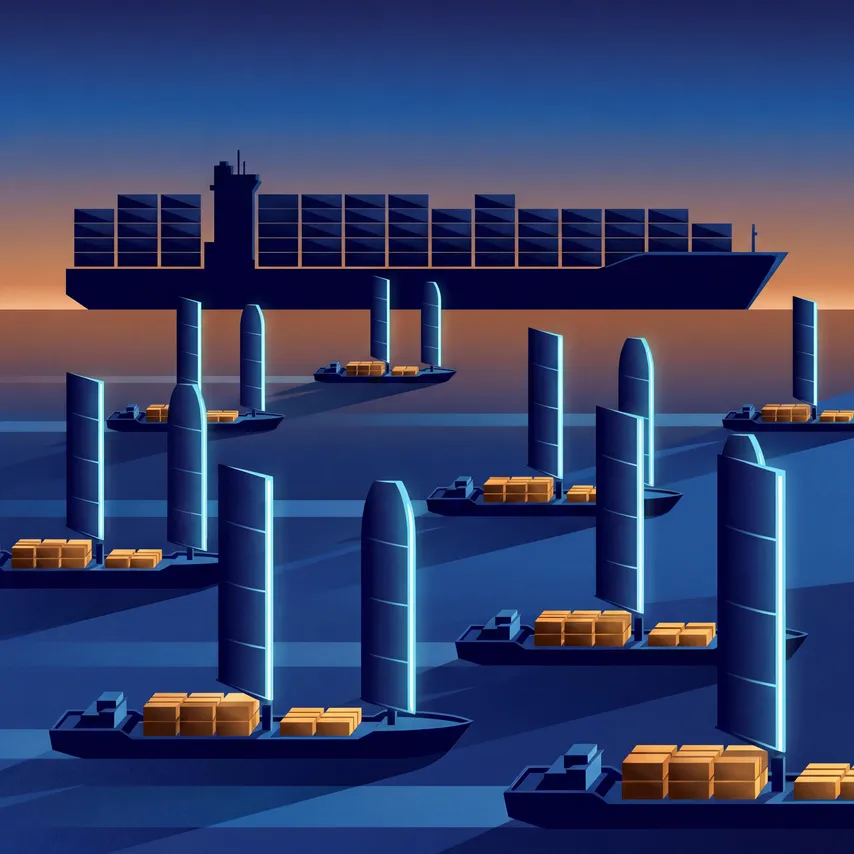
The implications reach far beyond Greenpeace. Shipping moves more than 80% of the world's traded goods by volume and faces growing pressure to decarbonise. The International Maritime Organisation, a UN agency, wants the sector to cut its carbon intensity by at least 40% by 2030 from a 2008 baseline, and reach net zero by around 2050. Those targets are reviving interest in wind propulsion.
There’s also a strong business case for the transition. "Commercially, fuel costs, carbon pricing, and stricter emissions regulations are rapidly strengthening the business case," says Jurg. DynaRig, he continues, can deliver “immediate reductions” in fuel spend and carbon liabilities.
Greenpeace's ship offers an unusual test of the system. While a cargo vessel runs a predictable route, this one must cross oceans, work in freezing waters, conduct research, and stay at sea for weeks at a time. If the system holds up under those conditions, it's evidence the technology isn't limited to luxury yachts or controlled demonstrations.
The shipping forecast
One challenge for the project is that ships take years to build, while the technology inside them can change much faster. The key decisions behind the vessel's energy systems were made in 2024, before Greenpeace signed its shipbuilding contract with Freire that May. Batteries and hydrogen systems are evolving quickly enough that some of those choices will already be being tested against newer technology by the time the ship sails.
Greenpeace is candid about what it does not yet know. Detailed data on energy consumption, battery performance, and fuel management will only become available after roughly a year of operation, once the systems have been adequately tested.
"The ship is not waiting on future technology breakthroughs to operate effectively," says Rondal. "It is designed to function globally from day one while reducing emissions as far as currently possible. We expect the vessel's use of fossil fuels to reduce even further over time."
In that sense, the vessel is a giant test bed for fossil-free shipping, even though the individual technologies are not all new. DynaRig has already shown that wind can power large sailing vessels across long distances, while hydrogen fuel cells, batteries, methanol engines, solar, and regenerative systems have each been proven independently. What is unusual is combining them all on a 75-metre ship built to operate for weeks at sea.
At this point, Greenpeace doesn't know how well all this will perform. How much of the vessel's propulsion will come from the DynaRig? How much electricity will the hydrogen fuel cells provide? How much marine gas oil will the ship need? The answers will matter more than anything on the drawing board. In practice, they'll decide whether the difference between "wind-assisted" and "wind-led" is more than a change in terminology.
A ship can carry a huge amount of sail and still lean heavily on its engines. The real test comes once the vessel is crossing oceans with people and equipment aboard, in conditions no one can control. Greenpeace is therefore betting that its new flagship can provide some of that evidence while doing the work its previous ships have always done.
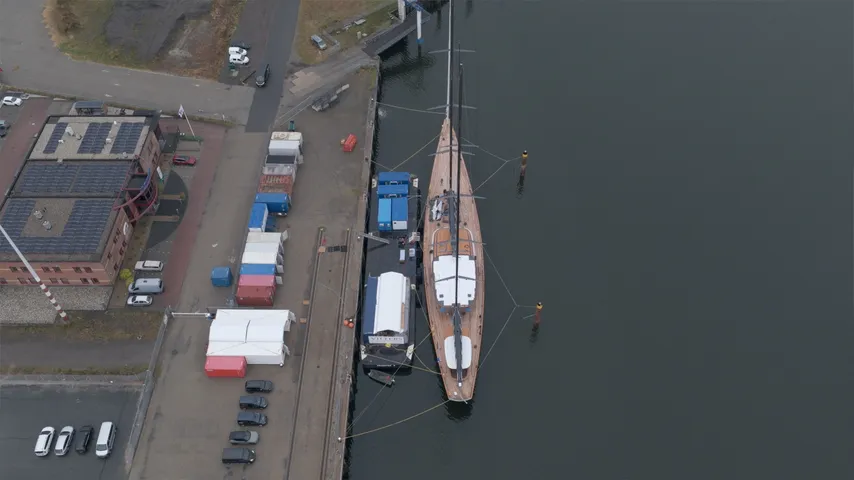
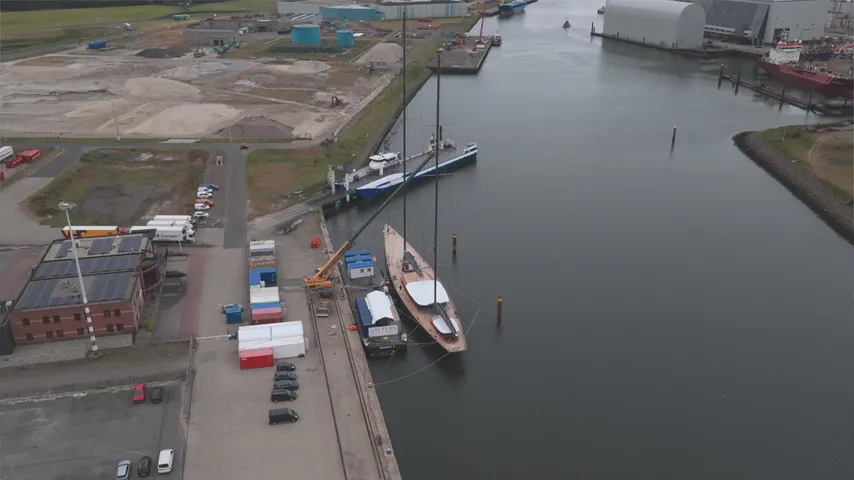
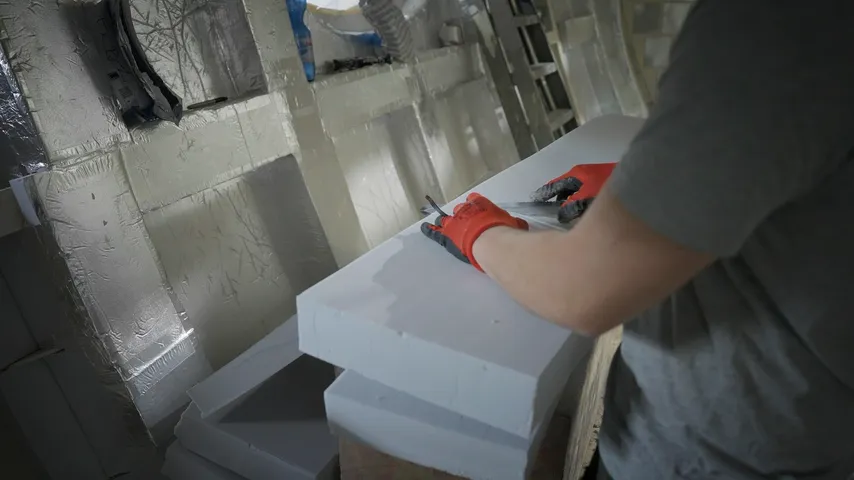
Back in Vigo, construction is underway. The keel has already been laid, and the hull is now taking shape. Meanwhile, the DynaRig masts are being manufactured separately in Poland by Southern Spars.
When the ship eventually leaves the yard, the experiment will finally begin. Greenpeace will have its new flagship, the shipping industry will have another data point, and the world will discover what a modern working ship can really do with wind power alone.