Cheap solar is breaking the old carbon capture rules
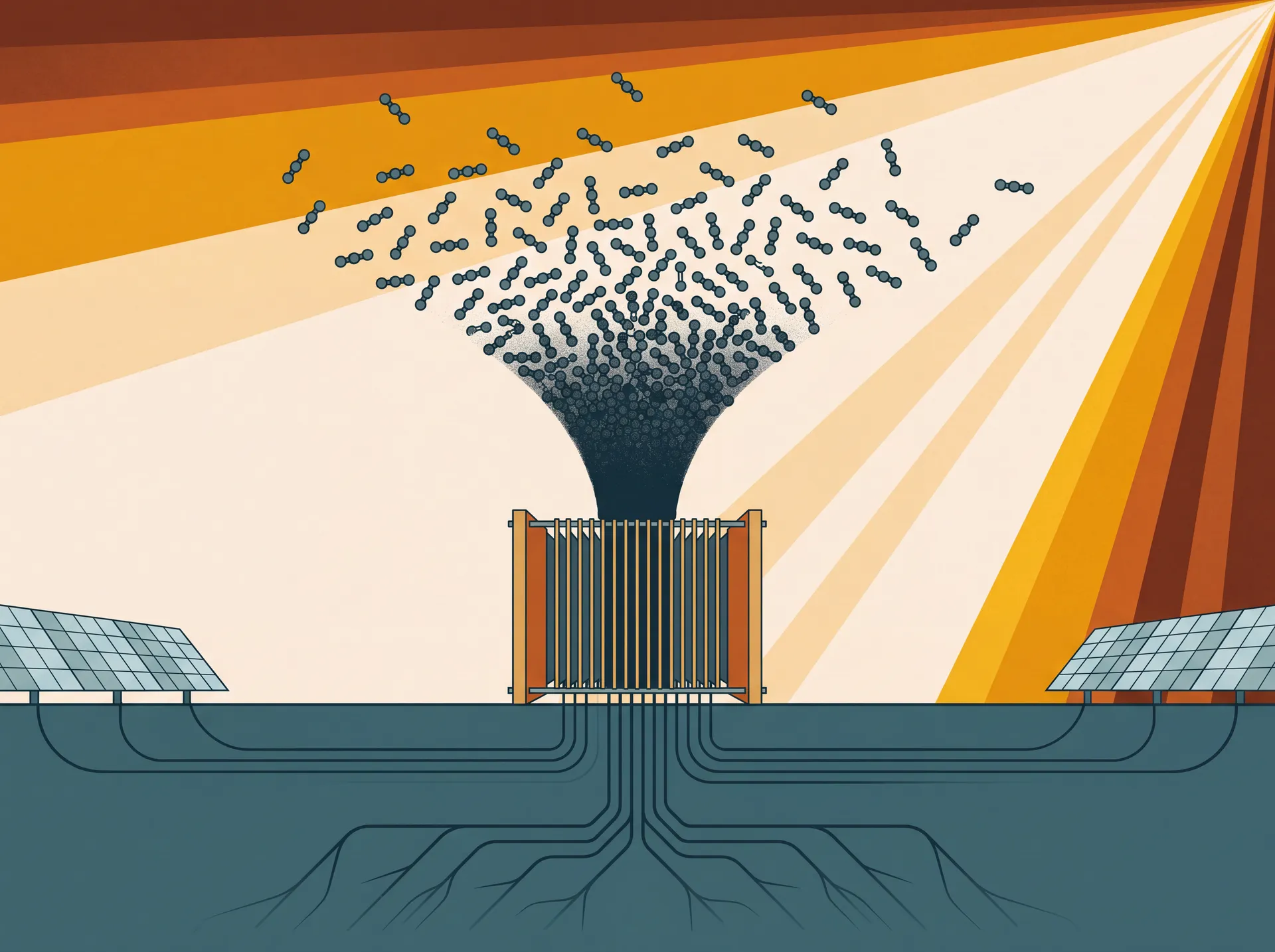
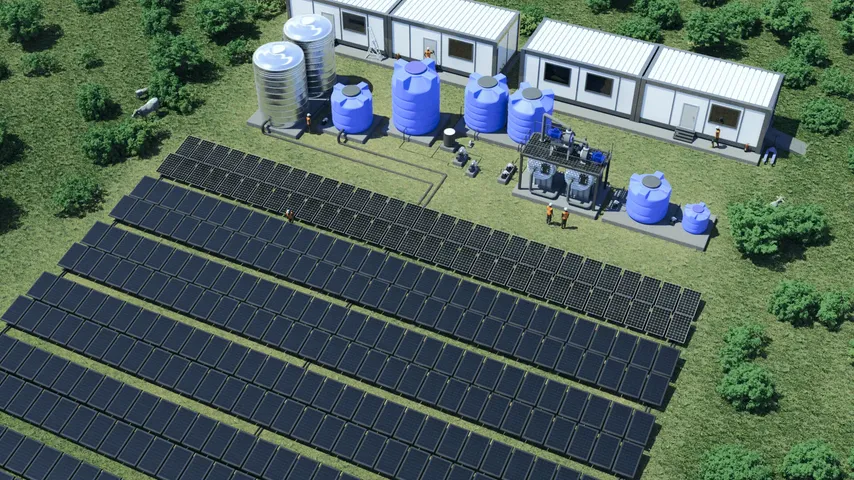
As the price of solar energy continues to plummet, engineers are beginning to rethink how energy intensive systems are built — trading efficiency for cheap, flexible hardware. Nowhere is that clearer than in direct air capture, where Dutch startup Brineworks has built an electrochemical process to pull CO₂ from the sky, and co-produce green hydrogen. And it’s being optimised from the ground up to run on cheap, intermittent renewables.
Solar’s cost collapse has consistently beaten conservative estimates in years past. The International Renewable Energy Agency’s data shows that the price of solar PV modules has fallen by 90 % since 2009, with LCOE of utility scale solar PV projects plummeting to as low as $ 35/MWh in 2023. And that collapse is starting to unstick one of climate tech’s most stubborn cost problems: direct air capture (DAC). DAC already works. It has for years. What it’s never been though, is cheap. And almost none of the hardware built for it was designed with power this cheap, or this intermittent, in mind. But that’s beginning to change.
For decades, DAC technologies have been optimising for efficiency because they use energy intensive heat or vacuum processes to pull CO₂ loose from chemical sorbents after it has been captured from the air. Power was expensive and available around the clock, so it made sense to spend heavily on equipment that wasted as little of it as possible. But when the cost of power becomes really, really cheap, the unit economics begin to change.
“The system that you build needs to be very different than the system that we would have built 20 years ago,” says Joe Perryman, co-founder and CTO of Brineworks. “We’ve always designed for minimising energy consumption with the trade off of having very expensive hardware. That’s not the way that we should be thinking about designing systems in this cheap solar future.”
“The actual efficiency of the process doesn’t matter as much as it used to matter before,” reiterates co-founder and CEO Gudfinnur Sveinsson. “What matters and what is critical is that the equipment is low cost, and that it can run intermittently. Because with that, even though it’s slightly less efficient, you’ll get the lowest cost product.”
Salt, water and no precious metals
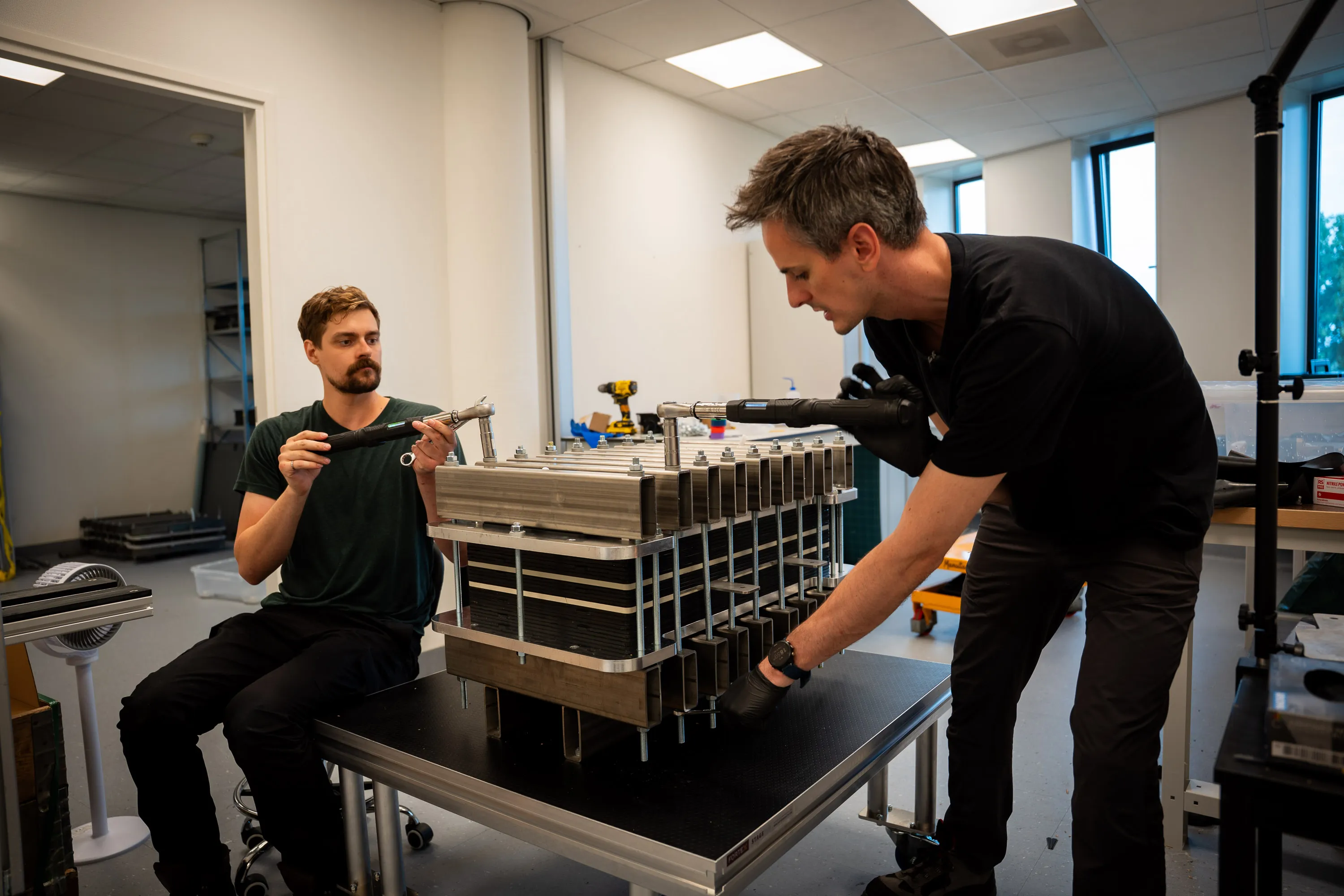
“Many legacy systems, even in electrochemical technologies, electrochemical DAC, electrochemical hydrogen production, are using materials that are just naturally scarce in the Earth’s crust. Things like platinum, iridium, ruthenium,” says Perryman. These precious metals are excellent catalysts and were the rational choice when every kilowatt-hour cost real money and shaving off a few percentage points of energy loss translated directly into savings.
But that logic collapses once electricity gets cheap enough, but isn’t available all the time. “We don’t need the most efficient catalysts,” Perryman says. “We need the cheapest ones.”
Sveinsson frames it as a resource problem as much as a cost one. Precious metals “are concentrated in a few places on Earth,” he says, and for some of them, “it’ll be very expensive and incredibly hard to source enough of them to scale up to the levels that we need.” Brineworks’ electrolyser is built instead from earth-abundant materials, accepting the efficiency hit in exchange for hardware that can be built at scale without competing for scarce inputs.
Clever chemistry
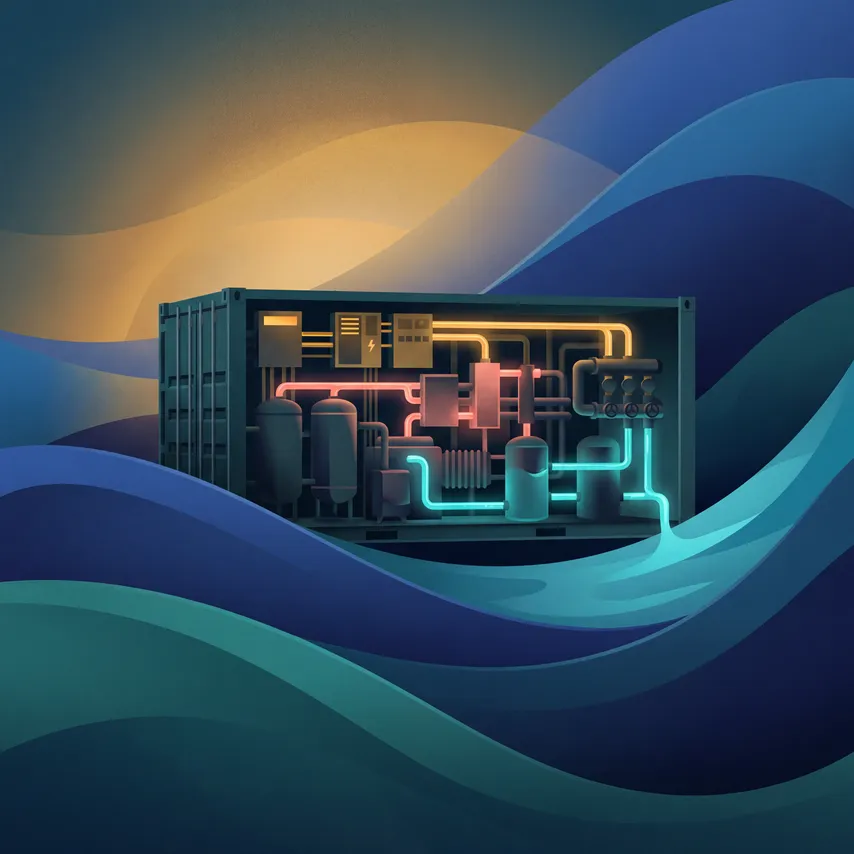
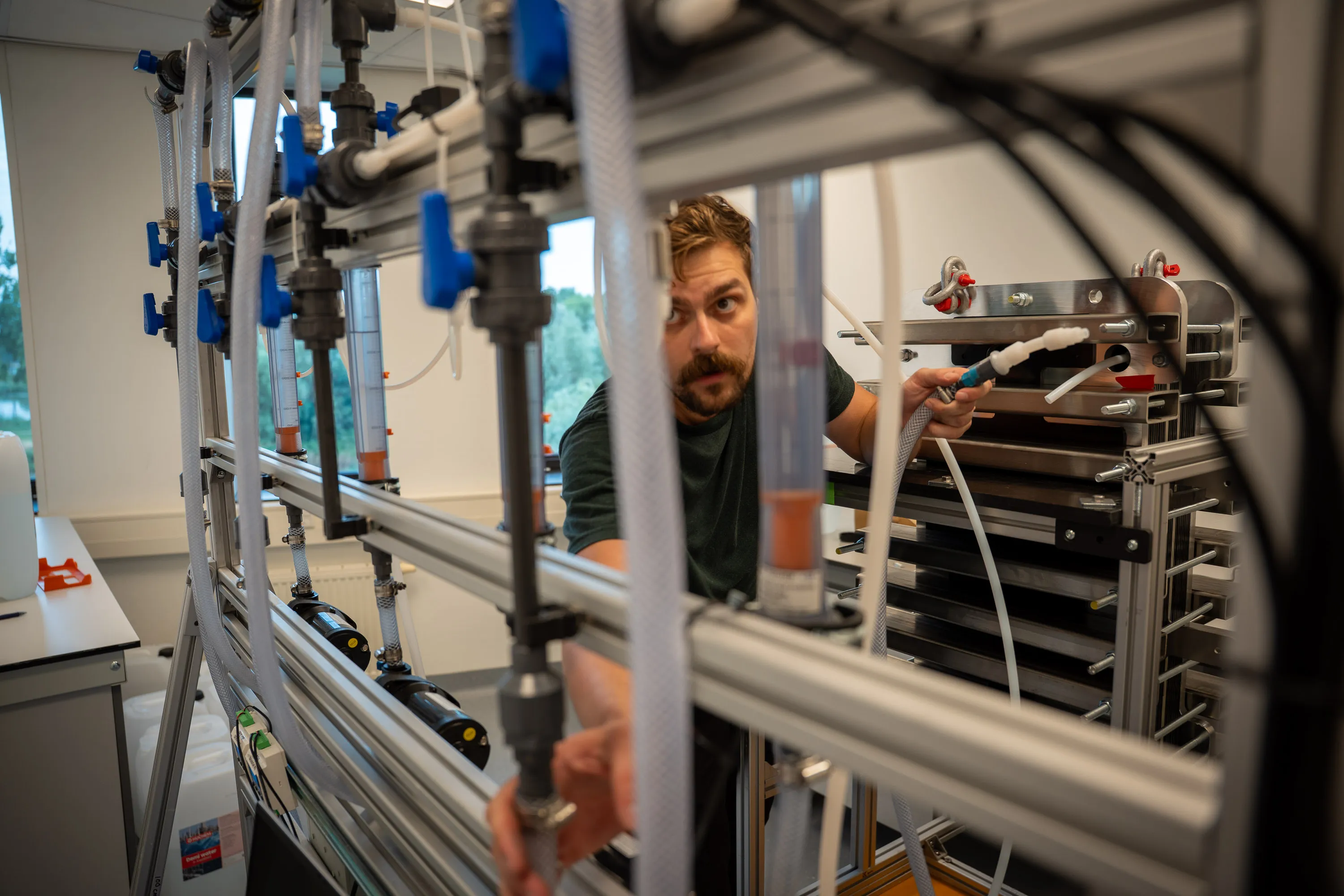
Brineworks’ electrolyser forms the core of their process, splitting a closed loop stream of saline water into acid and base streams and co-producing green hydrogen in the process. Carbon capture happens downstream of that, in a separate air-contacting step where the base reacts with CO₂ the way any alkaline solution does, locking the gas up as a dissolved carbonate and pulling it out of the atmosphere.
The acid stream is then re-introduced to the carbonate-rich solution to pull the CO₂ back out as a concentrated gas, the same basic chemistry that makes baking soda fizz when it comes into contact with vinegar, only run in a controlled loop to deliver a concentrated stream of CO₂ ready for storage or use. Chemists call this approach a pH swing. “Rather than using heat and vacuum and those sort of amine chemical sorbents, we can use just electricity and water, and that can do the work for us,” says Perryman.
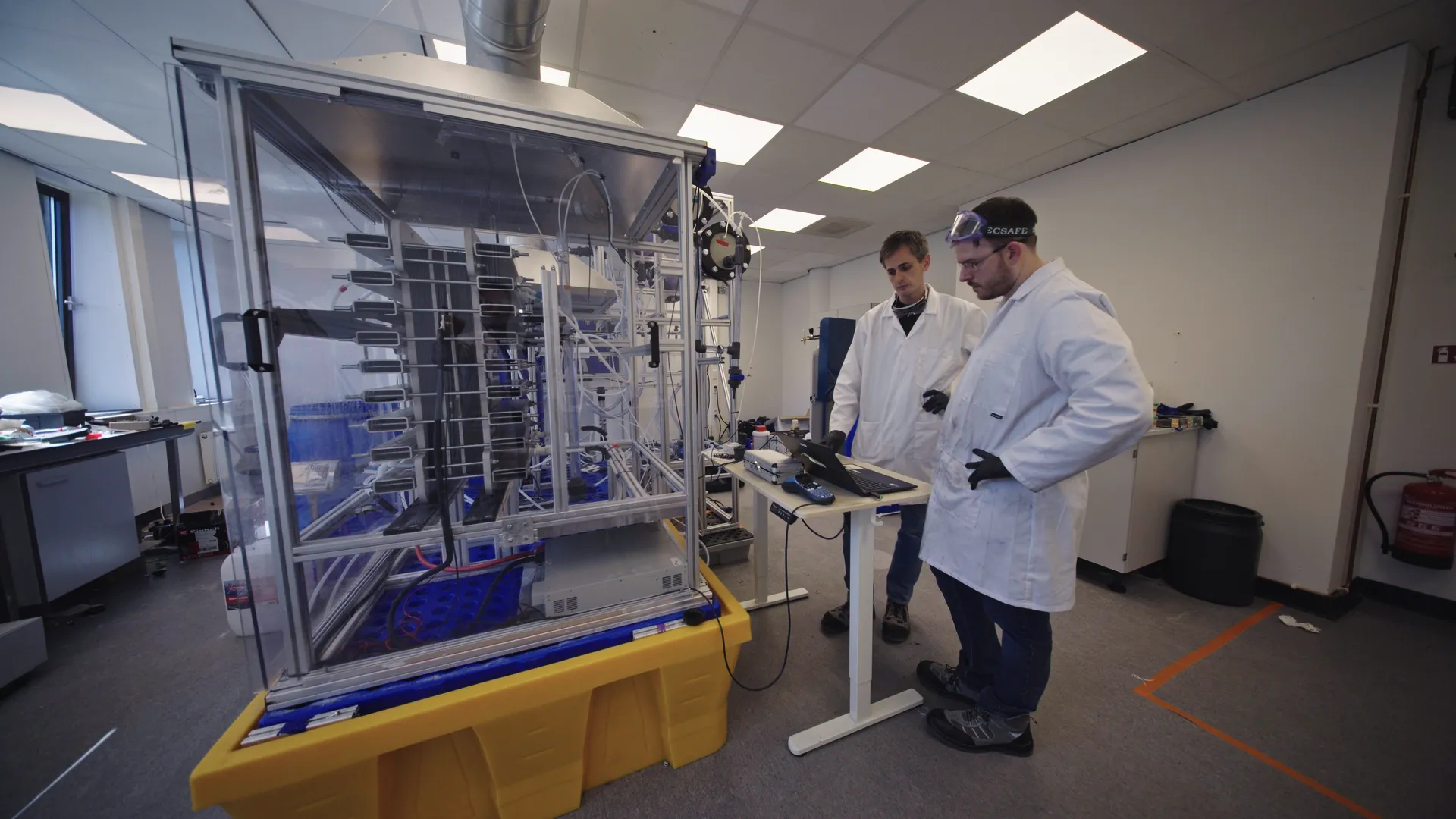
This electrochemically driven pH swing is where Brineworks and a few other new DAC startups separate themselves from the industry’s first generation players who mostly relied on sorbents, predominantly amine based, which required heat or vacuum to release the captured CO₂. And because an electrochemically driven pH swing doesn’t have such large temperature or pressure processes to spin up and down, they can be more easily engineered from the ground up to run off intermittent renewable power.
One process, two products
And then comes the hydrogen, the second half of the commercial case which makes Brineworks’ tech stack particularly interesting. “The co-production of hydrogen is a key component to make the economics very competitive,” Perryman says.
If you combine the captured CO₂ with hydrogen you get the feedstocks for synthetic hydrocarbon fuels. That matters because it could provide a cost competitive fuel to de-carbonise industries like aviation and shipping. Batteries are still too heavy for long-haul flights and container ships. But synthetic fuels, chemically identical to their fossil equivalents, can drop into existing infrastructure right now.
One process, in other words, is aimed at two markets at once: permanent carbon removal, and the feedstock supply chain for fuels that heavy industry will keep needing for decades.
From a lab in Amsterdam to a plant that works
Sveinsson and Perryman met by accident. While studying climate policy at Columbia University, Sveinsson came across the idea of using salt water to pull CO₂ from the air and began looking for collaborators. A chain of introductions eventually connected him to Perryman, a PhD electrochemist finishing a postdoc at Stanford. Two Zoom calls later, in January 2023, they decided to build a company around it.
They moved to the Netherlands that July with, as Sveinsson puts it, “nothing except drawings on a piece of paper and some ideas.” A small team built and tested the first prototype electrolyser in an Amsterdam lab that autumn, then took it into the field the following year: a pilot plant in Gran Canaria.
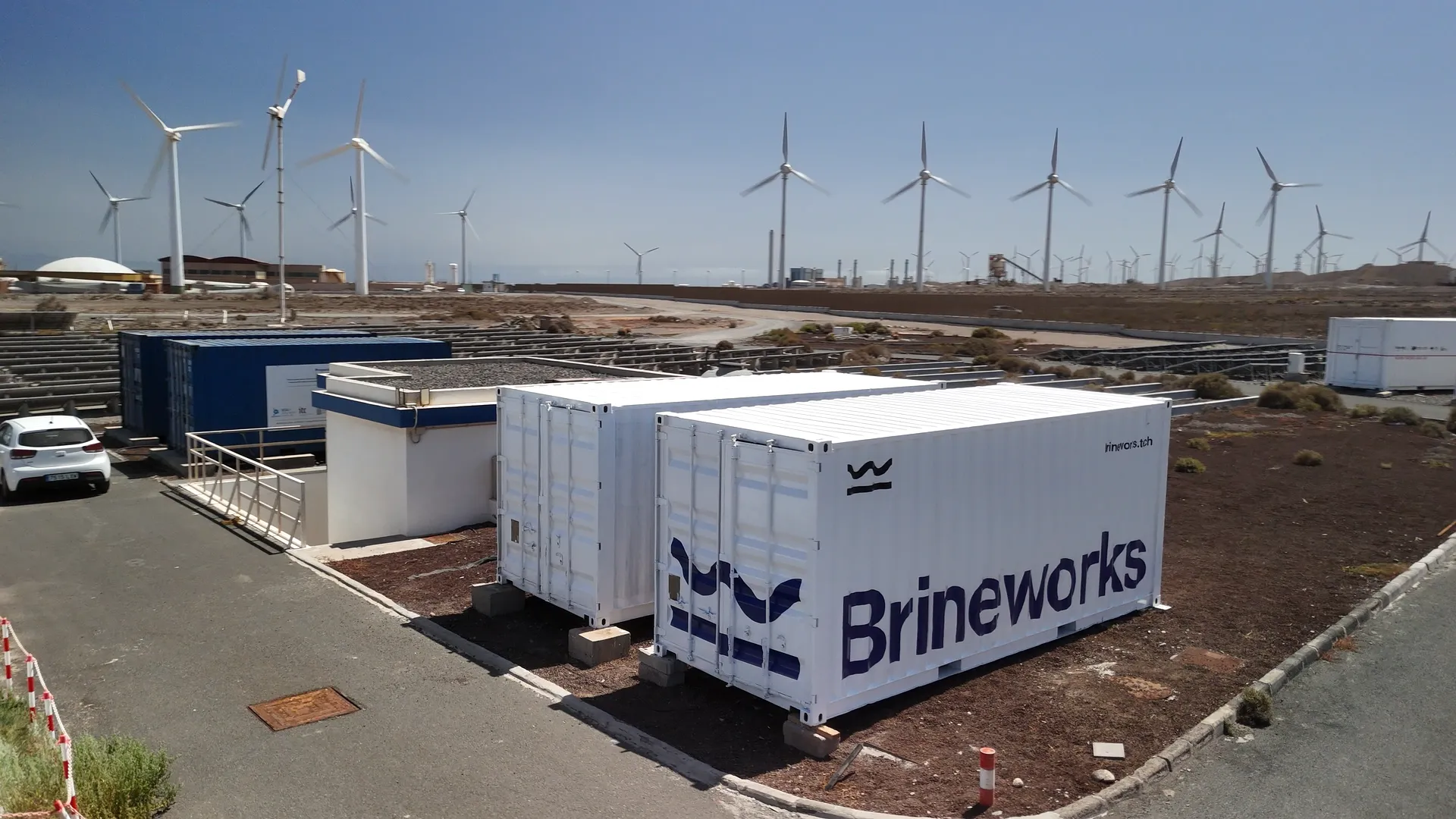
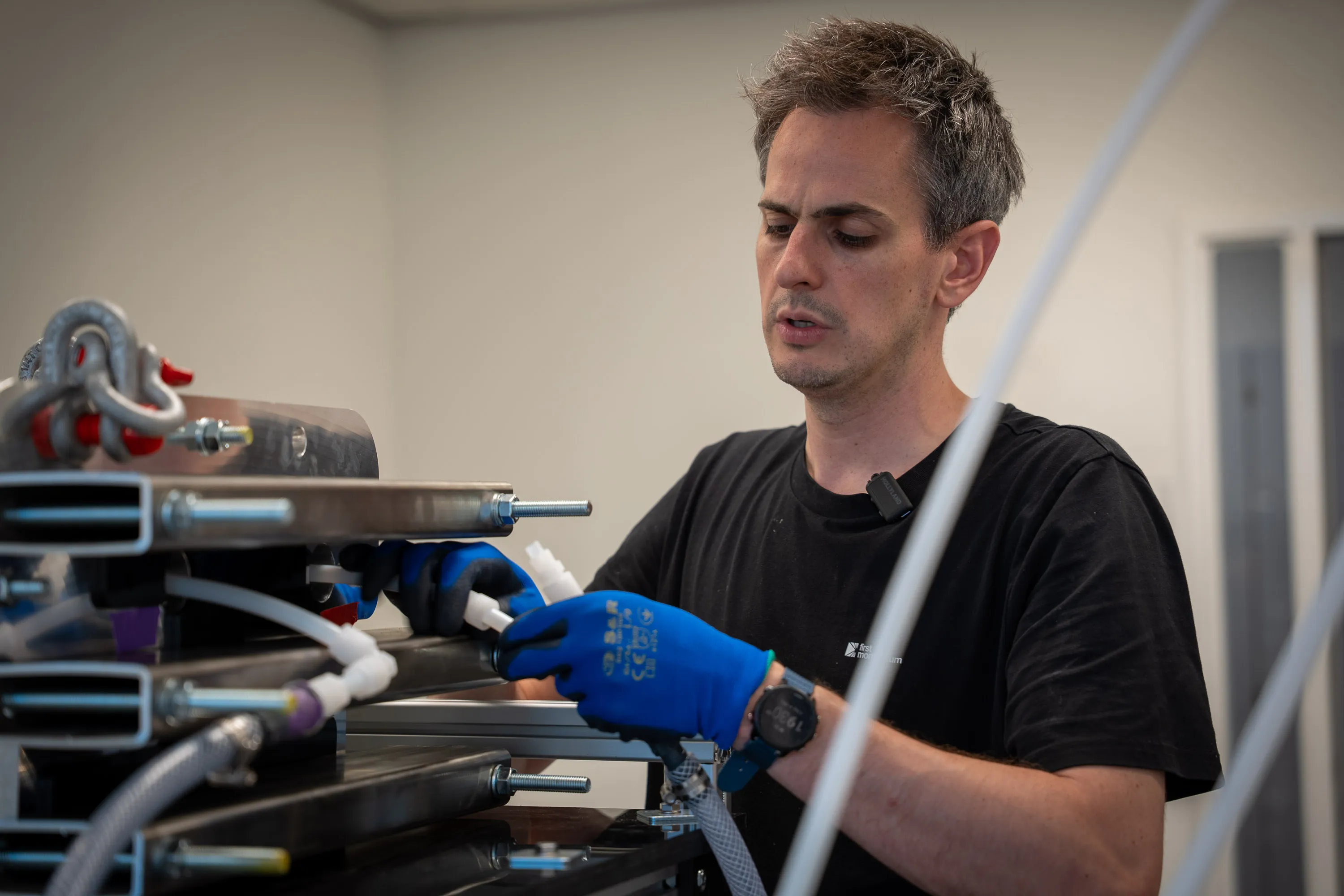
Building it wasn’t easy. “We were thousands of kilometres from home building a technology for the first time in a place that we didn’t necessarily know,” Perryman recalls. With a team of five and little local engineering support, they had to learn to build electrical cabinets from scratch or accept months long turnaround time from local companies. So they converted an office into a workshop with two weeks’ notice. “I think that general process of looking for support, being told you’re crazy if you think you can do this on time, and then getting around it by learning and doing it ourselves. That was the hardest thing that we’ve ever done as a company,” recalls Perryman.
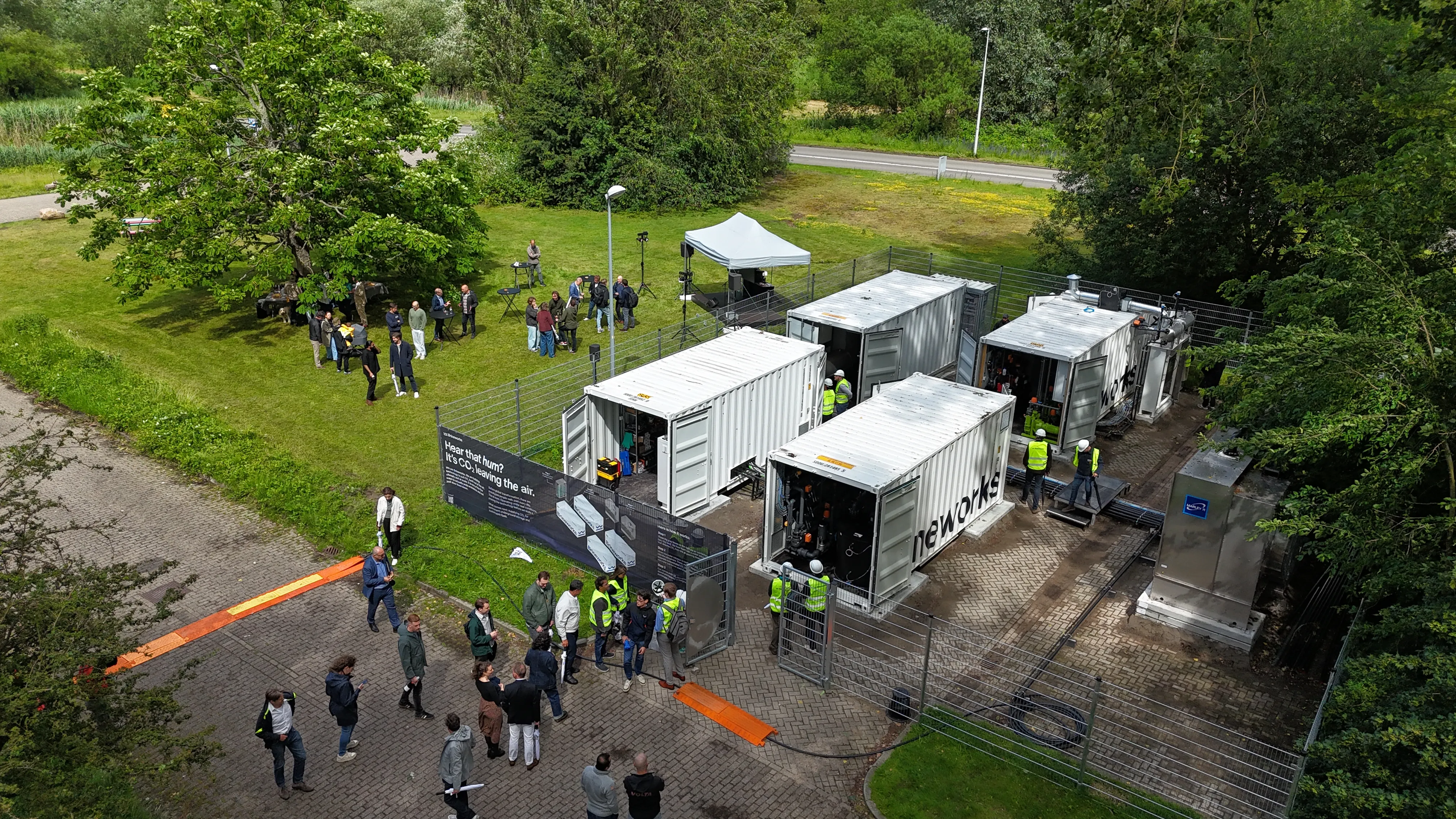
So far Brineworks has raised € 2 million in pre-seed funding led by Pale Blue Dot in 2023, followed by a € 5 million seed round in 2025 led by SeaX Ventures, and a € 1.8 million grant from the European Innovation Council. Fast forward to today and their plant running in Amsterdam can capture 25 tonnes of CO₂ per year under normal operation, with a designed capacity of up to 100 tonnes per year.
The numbers that need to fall
The whole thesis rests on one cost curve pulling two others down with it. Solar sets the price of the electricity that runs Brineworks’ entire process, so as solar gets cheaper, the cost of both the captured CO₂ and the co-produced hydrogen falls with it, since both come out of the same electrolyser running on the same power.
Sveinsson explains that at solar prices of roughly $ 20–30/MWh, that could work out to around $ 200 per tonne of CO₂ and about $ 3.50 per kilogram of hydrogen. Push solar down toward $ 10/MWh, and DAC costs fall below $ 100 per tonne while hydrogen drops to somewhere between $ 1 and $ 1.50 per kilogram.
“That’s when we can now start to compete with the fossil alternatives,” Sveinsson says. “We can make green methanol for the same cost as fossil derived methanol, and that’s the tipping point when we’ll see the world move rapidly from fossil to synthetic fuels.”
Brineworks doesn’t control the price of solar. What it can control is how cheaply its own hardware turns that power into CO₂ and hydrogen, which is precisely the design problem the whole company is built around.
Not the only ones betting
Brineworks isn’t alone in making this bet. A cluster of companies, including Phlair, Greenlyte, and Mission Zero, are pursuing electrochemical approaches to carbon capture, all working from the same premise: that cheap, intermittent-friendly electrochemistry is what will finally drive DAC costs down.
“The companies that pioneered direct air capture proved this could work not just in theory, but in the real world. We’re standing on their shoulders. The hard but crucial next step is making the technology drastically cheaper and easier to scale” says Sveinsson.
What happens next?
An upcoming milestone for Brineworks is a first commercial-scale plant, which will help make the step from “proven technology” to “bankable infrastructure.” Sveinsson also points to a less obvious upside: distributed, solar-driven synthetic fuel production could loosen the geography of energy geopolitics that has concentrated conflict around a handful of oil-producing regions for a century. “Any nation in the world can start to build up massive amounts of solar and wind energy,” he says, “and people around the world can start to make their own fuels.”
Whether that plays out at the scale the climate math demands is still unproven. But the underlying bet, that the next unlock in carbon removal is cheaper hardware rather than more efficiency, is one a growing number of engineers are willing to build a company around. “So that’s what we’re building,” says Sveinsson “a very cheap system that can run intermittently, pull CO₂ out of the air when it has access to sunlight, and in the end produce synthetic fuels for the world”.