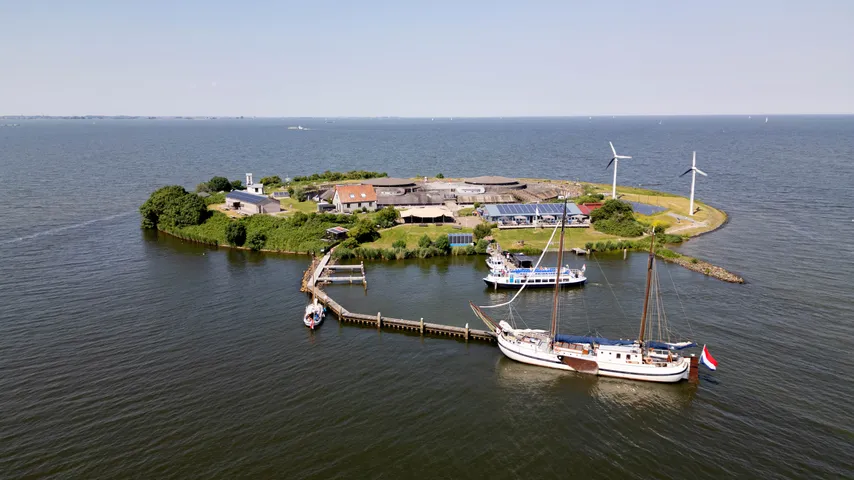
How a Dutch island became energy independent
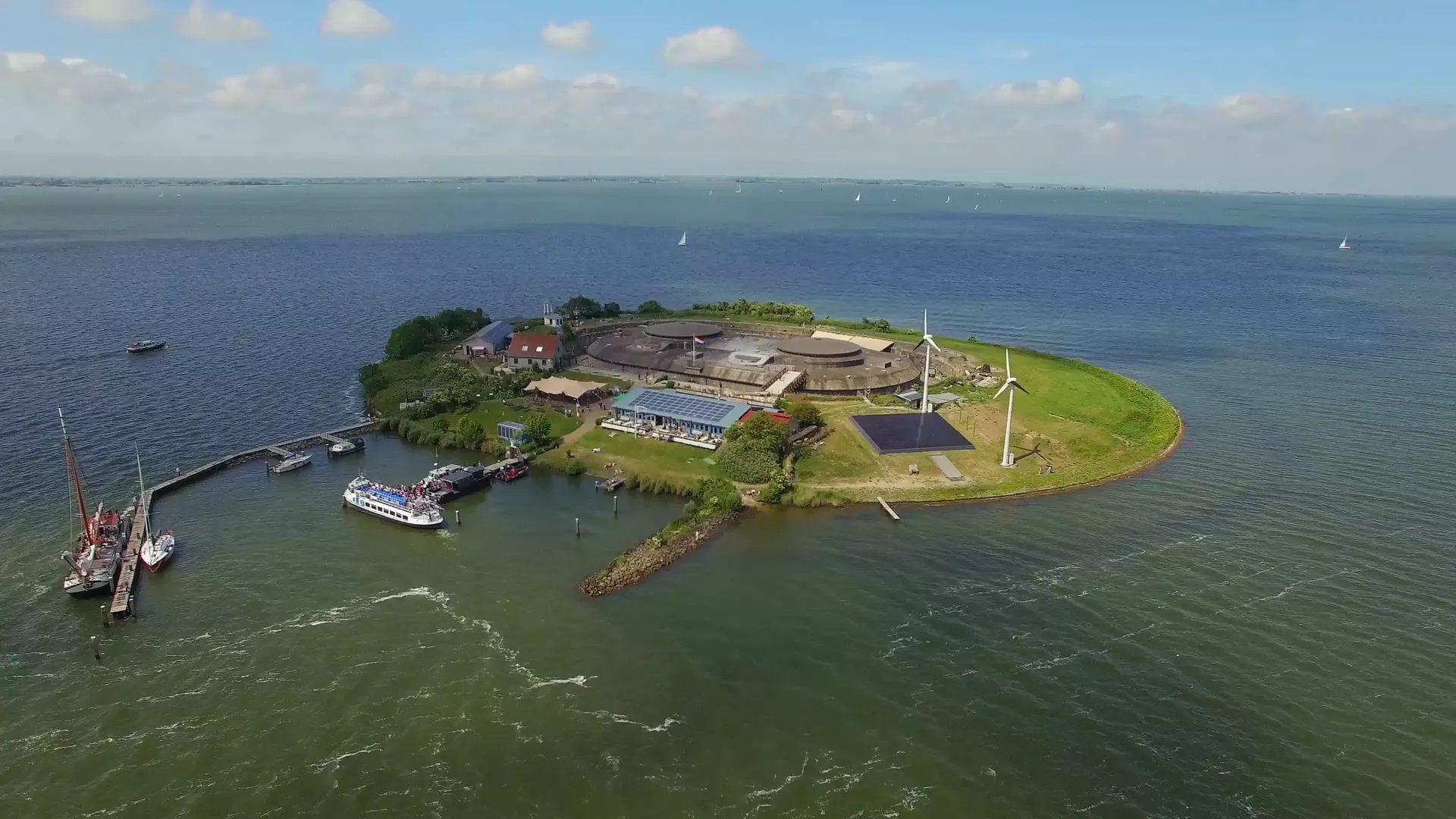
When the team at Fort Island Pampus first looked into how to power the site, they briefly considered connecting it to the mainland grid. It didn’t take long for that idea to be shut down though; energy independence is in the island’s DNA.
Ever since Pampus was built as a self-sufficient military fortress in the late 19th century, it has never been connected to the shore — and there was no reason to fly in the face of that history.
As engineer and technical manager Martin Verweij explains in our video, Pampus’ goal is to drive into the future by embracing its heritage, not inverting it.
In other words, they want to use their history to tell a new story. Back during its construction in the late 1800s, Pampus was a high-tech marvel. In those days, the steam installation provided soldiers with electric light and running water, while much of the general populace still used candles. Now, that has been swapped out for a modern, independent micro-grid.
To power the island — which includes a restaurant, museum, and living quarters — Pampus requires around 180 MWh of energy annually. This is achieved through a carefully balanced triad of natural resources: a network of solar panels generating roughly 100 MWh, two 15-metre wind turbines contributing 70 MWh, and a smart biodigester that turns up to 50 kg of daily kitchen waste into 10 MWh of biogas.
While generating energy on good days is simple, conquering the last 5 % is the real challenge — especially in the winter gloom. The heart of this solution is a 372 kWh lithium iron battery, something that’s backed up by a 20 kW electrolyzer that turns excess power from the summer months into hydrogen. This is used to provide power in those moments when the weather doesn’t play ball.
The management of this variable energy is another stepping stone. But, as always, technology can help. The Pampus team uses a piece of software called Euto; rather than just reacting to low batteries, the platform will look at the island's booking agenda and weather forecasts, adjusting energy consumption and storage in relation to this.
Fundamentally, Pampus is on a journey. It’ll still take several years to fully perfect the system's forecasts and consumption, but, despite this, the island is already running almost entirely on renewable energy.
But it proves one thing: if you can build a resilient micro-grid on a wind-swept fortress in the water, you can do it anywhere.
Watch our video below to get an even better understanding of Pampus:
Thanks to Strawberry Fields for the use of the animations and drone footage. ::